
Fulbright Chronicles, Volume 4, Number 2 (2026)
Author
Melissa Kulp

Abstract
This article reflects on a US Fulbright Scholar’s participation in the International Education Administrator (IEA) program in Germany. It examines Germany’s dual education system, emphasizing the integration of academic and vocational pathways. Insights gained inform recommendations for enhancing US career services through industry-academia partnerships, workforce readiness initiatives, and cross-cultural exchange. By comparing educational systems, the article highlights opportunities to strengthen student employability and global competencies, fostering impactful reforms in higher education and career development.
Keywords
Career Services • Vocational Training • Workforce Development • Higher Education Reform • Germany
Background
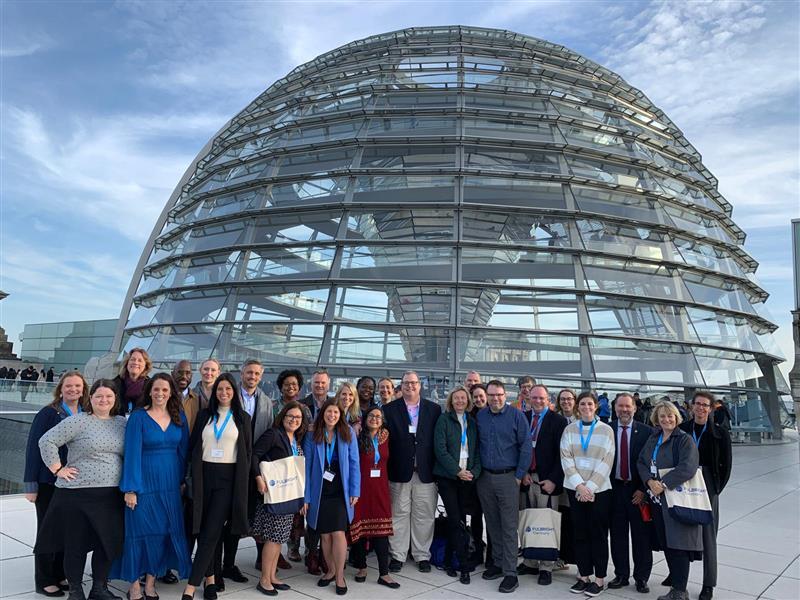
In an increasingly interconnected world, education systems reflect cultural values and act as blueprints for societal progress. The higher education models of Germany and the United States each offer distinct strengths and challenges in accessibility, structure, and workforce alignment. In the US, my career in post-secondary career services has focused on helping students align their values with major choices, experiential learning opportunities, and their entry into the workforce. This focus on bridging education and employment made my Fulbright International Education Administrator (IEA) Award experience particularly impactful, offering an in-depth look at Germany’s higher education and apprenticeship system. The award brought together 17 higher education administrators for an intensive two-week immersion in German academic culture and practices. The IEA program aims to help US administrators learn about the German educational system, ask questions, and engage in discussions with German experts and counterparts about the benefits and challenges of both systems. The experience was built on the idea that knowledge is power and that through collaboration, we can make change and reform.
Although the IEA Award primarily targets international education administrators, its inclusion of educators specializing in career services allowed me to explore how Germany connects education to employment. During the program, I was immersed in Germany’s approach to career development through in-depth engagements with experts, university visits, and conversations with international offices. These interactions provided a firsthand look at how institutions build strong connections between education and employment, inspiring new ways to integrate similar practices into my own work in career services. This experience deepened my understanding of global educational practices and highlighted invaluable opportunities for cross-cultural learning that can inform and inspire administrative practices.
Eye-Opening Perspectives on German Education
Understanding Germany’s higher education system required examining its primary and secondary education structure, learning directly from a high school principal from Potsdam. For many of the IEA cohort participants, hearing about the German educational system was an eye-opening experience when we discovered that students are “tracked” into different schools with distinct higher education outcomes as early as grade five. While this system varies slightly across Germany’s 16 federal states, students generally enter one of three educational paths: Gymnasium, Realschule, or Hauptschule. The Gymnasium serves as an advanced preparatory track for university, offering rigorous academic coursework. The Realschule provides a combination of academic and hands-on learning, preparing students for vocational training or other forms of applied higher education. The Hauptschule focuses on practical skills and is well-suited for students pursuing apprenticeships or industrial occupations. Debates arose immediately with the principal, as this rigidity led our cohort to question how a student in grade five could possess the self-awareness and foresight required to make such key decisions about their future career paths. However, to better understand and appreciate the system, we visited institutions that serve graduates of each educational “track.” My focus centered on how German institutions prepare students to be “career ready” for the workforce, providing insights into their alignment of education and employment.
On other days, speakers from the German Rectors Conference shed light on the efficiency, accessibility, and workforce-oriented structure of the German higher education system. The Deutsches Studierendenwerk (German Student Affairs) staff shared that student services such as housing or counseling are not managed by universities but by third-party providers. Public universities, which are predominantly tuition-free, allow students to study without accruing debt, a stark contrast to the high tuition costs faced by US students driven in part by increasingly sophisticated student amenities. This model ensures that education remains accessible to a diverse population, promoting greater socioeconomic mobility. German academic programs are also highly specialized, with students concentrating on a field from their first semester, creating a focused and rigorous academic environment.
An Exemplar Career Model for Everyone
Central to the system is the dual studies apprenticeship model, a hallmark of German education that blends theoretical instruction with hands-on, practical training. This innovative approach provides students with invaluable real-world experience and ensures their skills align with workforce needs. During the IEA, I observed this first-hand at Hochschule für Wirtschaft und Recht Berlin, a university of applied science specializing in business and economics. Here, internships were a required component of the curriculum supported by university partnerships with over 700 companies offering three-year practical work experiences. The Head of Computer Science explained how students simultaneously attended classes where they learned the theories underpinning their hands-on training. I was impressed by the duration and depth of this applied learning and how effectively it bridged the gap between academia and industry. Classroom instruction was directly informed by industry needs, allowing students to immediately apply their knowledge in professional settings, benefiting the university, student, and the company alike.
As we visited more universities and spoke with education leaders, we were able to see that Germany’s early tracking system plays a fundamental role in shaping students’ academic and career trajectories. By categorizing students into distinct pathways such as Gymnasium, Realschule, or Hauptschule from a young age, the system tailors education to align closely with individual strengths and career goals. This structure allows for a deep focus on specialized fields of study, helping students build confidence and self-efficacy as they progress toward their goals.
Comparing Workforce Preparation in Germany and the US
By the time German students enter universities or apprenticeship centers, they are well-prepared for specific careers, having spent years developing the skills and knowledge required for success. In contrast, US students often spend their initial two years of college exploring various disciplines before committing to a major. While this exploration furthers intellectual curiosity, it leaves less time for students to engage in internships and experiential learning opportunities directly tied to their fields of interest. Germany’s dual apprenticeship system combines hands-on training with academic coursework and enhances career readiness. By providing students with practical experience and a salary, the system alleviates financial pressures and ensures that students can focus on their studies without external financial burdens. This integrated approach serves as a model for aligning education with workforce demands, creating an effective pathway to career success.
In contrast, the US higher education system emphasizes flexibility and breadth, with students typically beginning their academic journeys through a liberal arts foundation. This approach encourages the exploration of diverse subjects through general coursework before declaring a major, fostering inquisitiveness and adaptability. Vibrant campus life and a strong emphasis on extracurricular activities contribute to creating a well-rounded educational experience. While internships are promoted as a form of experiential learning, they are often optional, short-term, and student-initiated, with no guarantee of employment. Many university-industry partnerships in the US frequently depend on employer fees to engage in recruitment, limiting access for smaller companies. These factors, alongside high tuition costs create significant financial and structural obstacles for many students navigating the US system.
Despite the many strengths the German system has, it is not without challenges. Its rigidity can be a drawback, as students have limited flexibility to move between “types” of higher education institutions. For instance, while it is possible for a student from Hauptschule to eventually attend a research university, the journey is complex. This stringency raised important questions within our cohort about the developmental appropriateness of expecting fifth-grade students to commit to career trajectories that may be difficult to reverse. Many of us, including myself, have dedicated our careers to helping post-secondary students who are young adults, explore their identities, find success in college, and define their professional aspirations. The stark contrast in systems underscored the complexities of balancing early specialization with the developmental needs of students, sparking intense discussions and reflections throughout our Fulbright program.
Lessons for US Career Service Offices
The US can draw valuable lessons from Germany’s early selection system and dual studies apprenticeship model, which destigmatizes vocational training and offers students clear, respected pathways to essential careers. In the US, a deeply ingrained societal pressure to pursue four-year degrees overlooks students’ interests and talents. Those who do not attend four-year institutions are often looked down upon and perceived as less educated. Many students enroll in college believing it is the necessary path and leave with no degree and insurmountable debt. In contrast, Germany’s early selection system reduces these stigmas by valuing careers such as skilled tradespeople, professions essential to the functioning of society. Although some American high schools offer vocational training, these programs are under-enrolled and often stigmatized as the options for students who are less inclined to attend college. If vocational programs were introduced earlier and framed as equally valuable career pathways, these programs could help students identify strengths and career interests sooner and better align education and workforce needs.
US institutions could also benefit significantly from the symbiotic relationships exemplified by Germany’s dual studies apprenticeship system. While community colleges in the US incorporate aspects of this model by collaborating with local industries to design programs aligned with regional economic needs, and business schools often engage industry leaders through advisory boards to refine curricula, there remains untapped potential for deeper, more structured integration.
One of the defining strengths of Germany’s model is its emphasis on developing both hard and soft skills, such as communication and problem-solving, through immersive vocational training. This dual emphasis prepares students not only for technical proficiency but also for navigating workplace environments. By adopting similar approaches, US institutions could promote greater student independence and confidence, as vocational training encourages learners to take ownership of their professional development. This approach promotes practical skill development and nurtures cross-cultural understanding, as seen in the commitment to address educational challenges and exchange of ideas during the Fulbright program.
Personal Reflections and Broader Implications of my Fulbright Experience
Through the Fulbright program, I had the privilege of engaging in exchanges with German and American educators about integrating academic and practical skill-building into educational frameworks. I was pleasantly surprised that despite what I found to be a superior hands-on experiential learning system, German administrators were interested in learning how to incorporate career services into their student resources, not just within the curricula. Many of the German administrators worked at institutions that lacked formal career service offices, and I was able to share my experience building career readiness programs among business students. At the University of Greifswald, the international services staff shared a new federal initiative called the FIT program, where support structures and career services at 89 German universities will be created for international students and graduates in hopes that they will stay and work in Germany. Speaking with the staff who had little prior work experience in career services was an incredible and unexpected opportunity for me to give back while on my Fulbright. I spent time with them, reviewing the FIT program policies and helping to construct a strategic plan for implementation. Moving forward, I hope to continue my partnership with Greifswald and other institutions involved in the FIT program.
Modern education must evolve to meet the dual demands of academic rigor and workforce readiness.
The rich discussions we had over two weeks highlighted a shared understanding that modern education must evolve to meet the dual demands of academic rigor and workforce readiness, inspiring innovative strategies to bridge this gap. During the last two days of the program, 10 German educators joined us and shared strategies for elevating the perception of vocational training at both younger and high school ages, operating within our current US model. With them, I was able to explore ways to foster deeper industry-academia collaboration, creating a cooperative relationship between career services, faculty, and employers. These exchanges emphasized the importance of cultural shifts and systemic reforms in adapting educational models across borders.
Conclusion
My Fulbright journey was transformative, offering a unique lens through which to view education, culture, and policy. Beyond the professional insights, it reinforced the value of international collaboration in addressing shared challenges and fostering innovation. It revealed that students everywhere are seeking education that leads to employment, and administrators who support students share a common commitment to student success, regardless of the country. This experience personally deepened my commitment to advancing career services and providing students with resources that are inclusive, equitable, and aligned with the needs of the global workforce. It validated the importance of hands-on work experience during college, a perspective we preach in career services. It also created lifelong friendships and collaborations I could only have dreamed of a year ago. Understanding that the IEA Fulbright primarily targets international services staff rather than career service administrators, I recognized this experience as an opportunity to explore IEA programming from a different perspective. My goal was to provide valuable insights to my home institution, while also raising awareness about career service initiatives in Germany. The German and US higher education systems have much to learn from each other, particularly in career services. For higher education administrators, the Fulbright IEA Award provides an opportunity to engage with global peers, exchange best practices, and bring back actionable ideas to their home institutions. The Fulbright experience not only furthers individual growth but also emphasizes the value of international collaboration in addressing shared educational challenges. Insights from Germany’s system present an opportunity to take a deep look at US career services, ensuring students are prepared to navigate an increasingly interconnected global workforce.
Further Reading
- BIBB. Federal Institute for Vocational Education and Training (VET). (n.d.) The German VET System. https://www.bibb.de/en/39.php
- Center for Regional Economic Competitiveness, American Council on Germany, and State Economic Development Executives Network. (2023). Bolstering apprenticeships in the U.S.: Lessons learned from Germany’s vocational education system. 2023. https://crecstorage.blob.core.windows.net/sede/sites/8/2023/11/Bolstering-Apprenticeships-in-the-US_Lessons-Learned-from-Germanys-Vocational-Education-System_Report_112923-2.pdf
- DAAD. (n.d.). FIT – Promotion of international talents for integration into studies and the labour market. https://www.daad.de/en/information-services-for-higher-education-institutions/further-information-on-daad-programmes/fit/
- Deissinger, T. (2022). The standing of dual apprenticeships in Germany: Institutional stability and current challenges.” In S. Billett, B.E. Stalder, V. Aarkrog, S. Choy, S. Hodge, & A. H. Le (Eds.), The standing of vocational education and the occupations it serves (pp. 83-101).https://doi.org/10.1007/978-3-030-96237-1_5
Biography
Dr. Melissa Kulp serves as the Executive Director of the Price Career Center at the Michael F. Price College of Business, University of Oklahoma. With 17 years of experience in education, Dr. Kulp specializes in integrating career readiness and employer relations into academic frameworks. She was a US Fulbright Scholar, participating in the International Education Administrator (IEA) Award to Germany in October 2024. She can be contacted at mkulp@ou.edu.