
Fulbright Chronicles, Volume 4, Number 2 (2026)
Author
Benjamin Junge
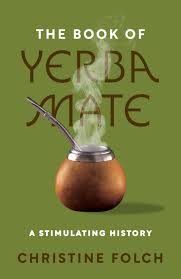
The Book of Yerba Mate: A Stimulating History by Charles Folch, who had a Fulbright Dissertation Research Grant to Paraguay, 2008-2009.
Across Argentina, Uruguay, Paraguay, and southern Brazil, it is as common to see people cradling a cuia (gourd) and bomba (metal straw) as it is to see coffee cups elsewhere.
Yerba mate, a caffeinated herbal infusion made from the leaves of the Ilex paraguariensis tree, is more than just a beverage—it is a social ritual, a marker of regional identity, and increasingly, a global commodity. Across Argentina, Uruguay, Paraguay, and southern Brazil, it is as common to see people cradling a cuia (gourd) and bomba (metal straw) as it is to see coffee cups elsewhere. Cultural anthropologist Christine Folch’s excellent new book, The Book of Yerba Mate: A Stimulating History, traces the odyssey of this storied beverage, from Indigenous Guaraní traditions to the Jesuit missions, through wars of independence, and into the hands of contemporary global consumers.
Despite its deep roots in South American history and daily life, yerba mate remains relatively underappreciated beyond the region, often overshadowed by coffee and tea in global markets. Yet, as Folch demonstrates, mate has shaped economies, fueled political movements, and even traveled across continents, finding a foothold in Middle Eastern markets, wellness trends, and specialty cafés worldwide. The first section of Folch’s book, Origin Stories, traces yerba mate’s Indigenous Guaraní roots and its eventual industrialization by the Jesuits, who systematized production and aroused suspicion among colonial authorities. The second section, Remaking the World of Mate, examines mate’s entanglement with nationalism, war, and scientific discovery. One of the book’s standout chapters explores the figure of the gaucho cowboy and his association with mate drinking, particularly in Argentina, Paraguay, and Uruguay, where nationalist movements of the nineteenth century romanticized the gaucho while largely overlooking his precarious place in society. Mate also played a role in one of South America’s bloodiest wars—the War of the Triple Alliance (1864–1870)—as control over mate-producing territories became a strategic concern. Folch also discusses how scientists, entrepreneurs, and governments sought to industrialize mate production, ushering in an era of commercialization that would set the stage for its current global expansion.
The final section, Mate Culture Goes Global, offers one of the book’s most compelling contributions, particularly in its analysis of yerba mate’s adoption in the Middle East. Folch provides a rich account of how Syrian and Lebanese immigrants brought mate from South America back to their homelands, where it has since become an ingrained cultural practice. The discussion of Islamic legal debates (fatwas) on mate consumption adds another layer of intrigue, illustrating how mate’s cultural significance shifts across global contexts.
One of the book’s outstanding qualities is its ability to weave historical and anthropological research into a compelling narrative. Rather than a dry academic treatise, The Book of Yerba Mate reads as a thoughtful and exciting journey through time and geography, accessible to both specialists and general readers. Folch blends archival discoveries, historical case studies, and anecdotal storytelling to illustrate how mate has shaped political and cultural landscapes—and her writing remains lively and engaging throughout.
Beyond its historical depth, Folch’s book is highly relevant to contemporary debates on sustainability, globalization, and cultural identity. It raises important questions about deforestation, monoculture farming, and labor conditions in mate production, and highlights how mate consumption has evolved through migration, trade, and transnational cultural flows. The book is also impressive for its interdisciplinary methodology, drawing from historical archives and economic reports, as well as interviews, participant observation, and firsthand accounts.
Admittedly, the book’s geographical focus leans somewhat toward Spanish-speaking Southern Cone countries, leaving Brazil’s mate culture and scholarly perspectives underexplored. (Anthropologists like Rubem Oliven, for example, have examined how urban middle-class Brazilians have reappropriated gaucho traditions—including mate drinking—as a marker of regional identity.) Additionally, Folch devotes less attention to mate’s expansion into mass-market products like bottled beverages and energy drinks, and the labor conditions and economic inequalities surrounding mate production are not explored in depth.
Reading this book took me back to 2002–2003, when I was a Ph.D. student and Fulbrighter conducting anthropological fieldwork in Porto Alegre, Brazil’s southernmost state capital. At first put off by mate’s bitter, earthy taste, I eventually became addicted. In Porto Alegre, mate drinking was an omnipresent public ritual—from university students carrying specialized thermos-backpacks to families strolling through Redenção Park on Sunday afternoons, cuia in hand. I recall attending community meetings during my research on participatory democracy, where a shared mate gourd circulated among activists as naturally as conversation. Mate was more than a drink—it was a form of social bonding and cultural identity. Two decades later, I still drink mate daily in the traditional gaucho style, even though my Hudson Valley surroundings lack the camaraderie of southern Brazil.
Folch’s fascinating study has taught me how mate is part of a much larger and more complex history—one shaped by colonial economies, transnational migrations, and global markets. Her work has deepened my understanding of mate not just as a cultural practice, but also as a commodity that has fueled wars, sustained communities, and found new life in unexpected corners of the world. Whether one comes to this book for its historical depth, cultural insights, or simply an interest in mate itself, it is a rewarding and thought-provoking read.
Christine Folch, The Book of Yerba Mate: A Stimulating History. Princeton, NJ: Princeton University Press, 2024. 264 pages, $29.95.
Biography

Benjamin Junge is Professor of Anthropology at the State University of New York at New Paltz. His research focuses on political subjectivity, social mobility, and class identity in Brazil. Junge is the author of Cynical Citizenship: Gender, Regionalism, and Political Subjectivity in Porto Alegre, Brazil (University of New Mexico Press, 2018) and co-editor of Precarious Democracy: Ethnographies of Hope, Despair, and Resistance in Brazil (Rutgers University Press, 2021). Junge is a two-time Fulbrighter: As a U.S. Scholar (2018, Brazil), he conducted ethnographic research in Recife on class mobility and political transformations. Under a Dissertation Research Fellowship (2001-2002, Brazil), he conducted Ph.D. research on leftist political representation in Porto Alegre. He can be reached at jungeb@newpaltz.edu.