
Fulbright Chronicles, Volume 4, Number 2 (2026)
Author
Cynthia Smith
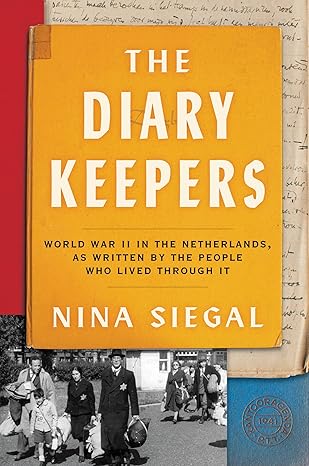
The Diary Keepers: World War II in the Netherlands Written by the People Who Lived Through It by Nina Siegal, who had a Fulbright Fellowship in Creative Writing in 2014.
In The Diary Keepers, author Nina Siegal taps into the importance of first-person contemporary narratives during World War II and the Holocaust, by letting us hear the diarists in their own words. Anne Frank: The Diary of a Young Girl is famous throughout the world, but it was only one of many diaries kept in the Netherlands during this time. Siegal sheds light on less well-known diarists, giving a dynamic and multifaceted context for the events of World War II in the Netherlands.
It seems the Dutch citizenry was encouraged to keep diaries, not only by the unprecedented historical events of their time (starting with the German occupation in May of 1940), but also by a suggestion from the Dutch minister of education, arts, and sciences with the promise that the government would establish a new National Center for War Documentation. The idea of the preservation of contemporary voices in World War II was at the forefront in the minds of not only the Dutch citizenry, but also the Dutch leadership exiled in Britain.
Siegel opens with her personal connection to the topic: she’s a descendant of a Dutch Jewish family, a fluent speaker of Dutch, and an accomplished New York Times reporter. While the atrocities that occurred at this time can make these pages difficult to digest, the author has the utmost respect and takes great care to let the diarists’ work be representative of their individual voices and experiences.
She uses nine diarists’ points of view throughout the book. The diarists are from varying Dutch backgrounds: Jewish; those without political affiliation; members of the Dutch resistance; and Dutch Nazis. Siegal provides background and other relevant information for each of the diarists and their particular circumstances.
The organization of The Diary Keepers focuses on the dates of the diary entries, pointing out how the various diarists logged the events. Philip Mechanis, a 54-year-old Jewish diarist in Westerbork Transit Camp, for example, penned the following on Saturday, May 29, 1943: “I have the feeling that I am an unofficial reporter covering a shipwreck. We sit together in a cyclone, feeling the ship leaking, slowly sinking. Yet, we’re still trying to reach a harbor, though it seems far away” (223-4).
Just a few days later, on Friday, June 4, 1943, Inge Jansen, a housewife and member of the NSB (a Dutch fascist organization) describes a very different life in Amsterdam: “I went with Adriaan [her husband and fellow NSB member], looking very smart and handsome in his SS uniform, to the Colonial Institute this afternoon, . . . We saw a film about the life of Friedrich Schiller” (230).
Siegal allows the voices of the individual authors to take precedence in the narratives. The juxtaposition of Jewish, resistance, Nazi, or Nazi-aligned experiences on the same day or surrounding a particular event reveals what was important to them to memorialize. Photos and documents are included throughout for additional support. Explanations of terms, places, and events, specifically related to Jewish culture, professions, and the roots of Dutch anti-Semitism are given for clarification. Supplemental information regarding the context for diary entries include the reason the diarist stopped writing, the fate of the diarist, and if possible, follow-up with the family of the diarist through interviews with living diarist or family members. Siegal also gives a comprehensive overview of diary publications, media releases, published works, and interviews with survivors in the final section of the book. This literature review, of sorts, is quite helpful for those wanting more information and sources on what happened in the Dutch Holocaust especially and to European Jewry generally.
Siegal further discusses how these sources have shaped the world-wide public perception of what occurred to European Jewry in the Holocaust. She attempts to process the disproportionally large percentage of Dutch Jewish victims who did not survive the war: “Of the estimated 140,000 Dutch Jews, only about 35,000 survived World War II” (11). Siegal discovered that the Dutch did not shelter Jews as well as Anne Frank’s story would imply.
These firsthand voices are important to combat future forgetting and denialism on the one hand and issues with human memory on the other.
In recent years, it has become increasingly evident that the voices of those who were eyewitnesses to the Holocaust and World War II are ephemeral unless recorded. These firsthand voices are important to combat future forgetting and denialism on the one hand and issues with human memory on the other. Diaries should be considered a “first draft of memory,” according to Siegal. In the conclusion, Siegal describes memorials erected in the Netherlands with loving detail and thoughtful prose. In reference to the Liebeschuetz Memorial, she writes, “The visitor must slow down to read each name. . . [T]hese names represent not just families, or family trees, but generations and diasporic kinship” (463).
The importance of the opening of the National Holocaust Memorial Museum or the Dutch Holocaust Memorial of Names, just a few years ago, is an example of the recent Dutch public responses to contemporary antisemitism. Siegal ends this book with “L’chaim,” A toast: To life.”
Nina Siegal. The Diary Keepers: World War II in the Netherlands as Written by the People Who Lived Through It. New York: Harper-Collins Publishers, 2023. 544 pages. $16.95.
Biography
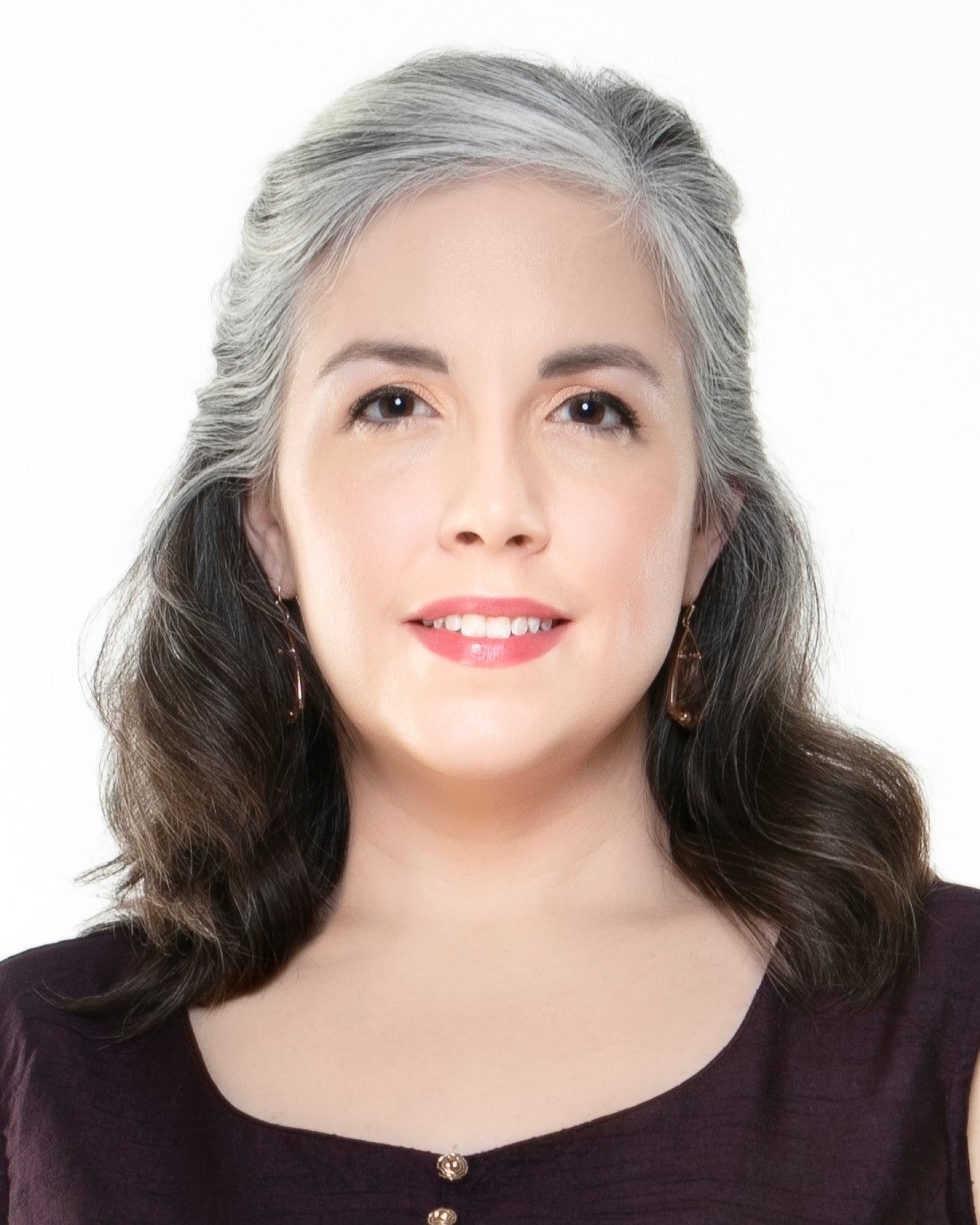
Cynthia L. Smith was a 2013 Fulbright Scholar in Musicology to Basel, Switzerland where she researched the Holocaust compositions of Viktor Ullmann, a Moravian composer who was imprisoned in Theresienstadt and murdered at Auschwitz. Presently, she is an Assistant Teaching Professor of Voice at Ball State University in Muncie, Indiana. Prior to her current position, she taught at KM Music Conservatory in Chennai, India. A Tennessee native and Western-classical mezzo-soprano, Cynthia, is an active performer and researcher of works by composers impacted by World War II, in addition to composers who are not often included in the classical canon. For more, visit: www.cynthialucilesmith.com. She can be reached at cynthia.smith@bsu.edu.