
Fulbright Chronicles, Volume 4, Number 3 (September 2026)
Author
David A. Taylor
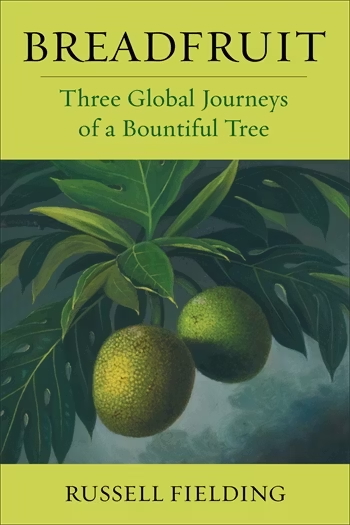
Breadfruit: Three Global Journeys of a Bountiful Tree by Russell Fielding, who was a Fulbright Scholar in Canada, 2005-2006.
Thirty years ago, as an editor on a US AID-funded project on tropical deforestation based in Bangkok, I sometimes joined the scientists walking through farmlands, forests, and home-gardens in Sri Lanka, the Philippines, Malaysia, Indonesia, Nepal, and India. One day high in the hills of Sri Lanka, I walked a narrow dirt path shadowed by the big branches and wide, pointed leaves of a magnificent breadfruit tree. I was awed by the huge, globular fruits hanging by their stems.
Russell Fielding’s book Breadfruit holds many similar surprising moments and, through the use of human stories, he helps us understand why people have such strong feelings about the tree. He introduces us to people around the world, including Hervé Ah-Scha, a cook in Marquesas, who demonstrated his musical technique for preparing breadfruit:
Working with a rhythm that a professional percussionist might envy, Hervé used his right hand to pound the coalescing mixture of breadfruit and manioc with the stone while his left hand alternatively folded the now-forming popoi into layers and splashed on more water. (15)
Readers also learn Herman Melville’s description of the tree penned in his early seafaring novel Typee. He compared the tree’s “grand and towering” profile to that of New England’s “noble elm” (65).
The subtitle of the book—“Three Global Journeys”— refers to what Fielding identifies as breadfruit’s major historical journeys: first, from its home in Asia across the Pacific; second, from the Pacific islands to the Caribbean. The third journey, worldwide, is happening with globalization today.
Breadfruit’s bounty in its first home, the Pacific region, goes beyond food, however, entangling culture, social class, and survival. In Fiji, a tradition grew up where new parents immediately buried their baby’s placenta and planted a breadfruit seedling. In Hawaii, Fielding discovered that breadfruit wood was a favorite for builders of canoes and surfboards. In the workshop of a surfboard maker named Pōhaku, the author witnessed the craft of making surfboards. Pōhaku said that breadfruit’s ability to flex and sit lightly in the water allowed a surfer to feel the ocean through her feet. Pōhaku starts with a rough cut of the wood and drinks a traditional beverage to honor the gods and ancestors and to “awaken the spirit of the wood” (21) which lets him see the surfboard within.
This sensitivity to the tree’s place in culture and the world reminded me of research by a colleague, Sri Lankan geographer Dr. Anoja Wickramasinghe. In the 1990s she interviewed scores of people in the central hills about the trees they valued. In home-gardens, they prized food-producing trees, especially breadfruit (Artocarpus altilis) and its relative, jackfruit (Artocarpus heterophyllus). The farmers she spoke with had ideas for making those trees even more efficient in their space-constrained home-gardens. Among families she interviewed, food came first; timber, poles and fuelwood second. Her research, part of a six-country study, helped reframe goals for tree-breeding programs, and showed me how science could address problems across disciplines.
Breadfruit also played a role in the brutal side of human history, from rapacious European voyages of conquest to later attempts at social engineering. Fielding doesn’t flinch from retelling these episodes. The Portuguese navigator who first named the Marquesas in 1595, wrote about a tree that produced food that locals “feed much upon it in all sorts of ways” (57-58). Then, after recording his description, he and his crew cruelly murdered 200 Marquesans and simply continued westward.
In its second global journey to the Caribbean, colonizers associated the natural fecundity of tropical environments and the ease of harvesting breadfruit with the laziness of people who lived there. (It went against the mantra of ‘struggle for your food’ that fueled northern European survival). A scheme traced oddly enough to the poet Samuel Taylor Coleridge, set out “to mend the Tahitians by extirpating the breadfruit tree from their island and making them live by the sweat of their brows” (67). Others saw breadfruit’s productivity as a chance to wring every ounce of production from the slavery system. There’s evidence that Voltaire originated the notion of bringing breadfruit to European plantations in the Caribbean. The British financed two massive, round-the-world voyages, including the notorious Bounty for that purpose. Later generations of Black Caribbean families detested breadfruit for its blandness and its suggestion of slave food.
St. Lucian Nobel laureate Derek Walcott upended associations from the slavery era with his poem The Bounty, which envisions a poignant moment in the historic mutiny where the breadfruit cargo, tossed overboard, suffers alongside the people. The seedlings bob in the ship’s wake, “their shoots dip and lift…” (129-30), the global tides of botany and humanity visibly entwined.
“Fielding brings a welcome spotlight to an overlooked player in the human cause of survival and the larger story of ties that bind botany and humanity.”
The author’s gusto and travels supported by the Sloan Foundation, make this a wide-ranging assessment with many tangents. Fielding brings a welcome spotlight to an overlooked player in the human cause of survival and the larger story of ties that bind botany and humanity.
Russell Fielding, Breadfruit: Three Global Journeys of a Bountiful Tree New York: Columbia University Press, 2025. 285 pp. $28.00.
Biography
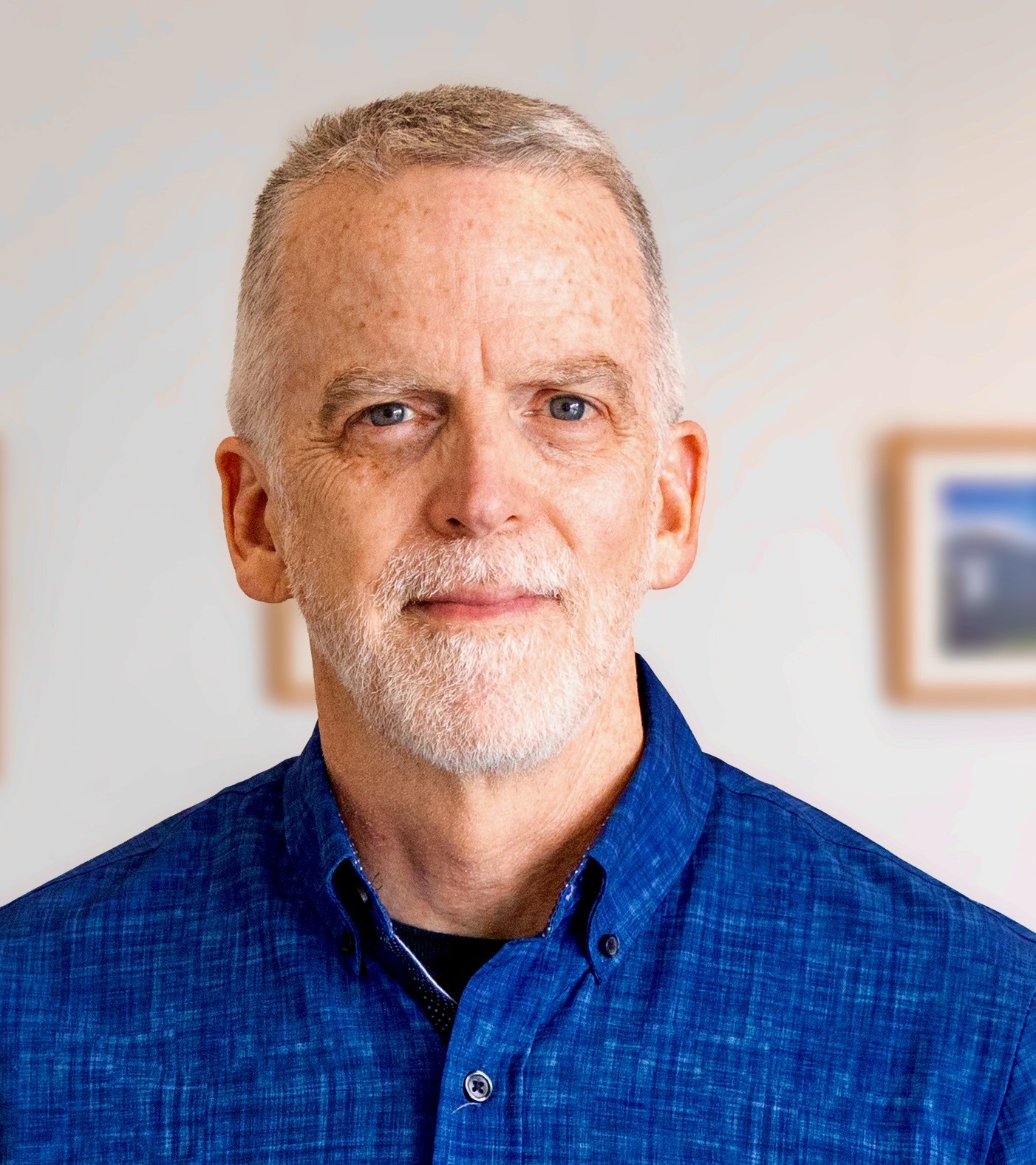
David A. Taylor was a 2025 Fulbright U.S. Scholar in Portugal, studying and teaching climate journalism at Lisbon Polytechnic. His nonfiction books include Ginseng, the Divine Root, and Cork Wars: Intrigue and Industry in World War II, which received an Independent Publishers Book Award for world history. He received a 2024 Outstanding Feature award from the Society of Environmental Journalists for “Inside the Crime Rings Trafficking Sand.” He teaches writing at Johns Hopkins University and produces a history/culture podcast, “The People’s Recorder,” which was awarded a 2025 Signal Award. He can be reached at david.a.taylor@jhu.edu.
Interview with Russell Fielding, author of Breadfruit
1. Why did you go to Prince Edward Island for your Fulbright?
My MA research involved a comparison of three islands off the coast of Florida, my home state. Each was about the same size and home to state park, but they differed in that one was connected to the mainland by a causeway, another was connected by a state-run ferry service, and the third had no connection at all except private boats. During my research, I was heavily reliant upon literature that had come out of UPEI’s Institute of Island Studies and was regularly in contact with the Institute’s director, Dr. Godfrey Baldacchino. As I was completing the degree, my advisor, Dr. Jeffrey Gritzner, recommended that I apply for a Fulbright, and UPEI was the obvious choice.
2) What were your responsibilities there?
I joined a research collaboration studying the cultural, economic, and environmental changes that take place on an island when a bridge is built to connect it to the mainland. I also started a new research project, focused on the former whaling communities around Trinity Bay, Newfoundland. Finally, I taught two courses, my first university-level teaching experience.
3) Living on Prince Edward Island must have been quite a change for you.
Indeed it was! I quickly fell in with a wonderful group of colleagues at the university and friends, importantly, that had nothing whatsoever to do with the university. It was this campus-community balance that really made my year meaningful. As for changes, the most memorable were the weather (obviously different from Florida but quite a change from Montana as well), the culture (I developed a strong interest in the tradition of “kitchen parties” and the unique folk/maritime music that goes along with them), and the “islandness.” I had never lived on an island before, and I came to understand personally a topic that, thus far, I had only known academically. From talking with older Islanders, I also understood what a change the Confederation Bridge had brought when it was built in 1997.
4) Any personal memories that you want to share?
One of my favorite memories was participating in the 13-kmTerry Fox Run (a series of nationwide runs to celebrate the legacy of Terry Fox, the young athlete and activist who had set off to run across Canada to raise money for cancer research). Another key memory was experiencing my first (and only, to-date) academic labor strike. While I was at UPEI, the faculty union called a strike to demand better pay and conditions. In solidarity, I cancelled my classes, but I met in cafes and pubs with small groups of students who wanted to continue our discussions.
5) What would you say has been the most lasting outcome of your Fulbright?
The Fulbright has had a real, lasting impact on my entire academic career. In terms of research, it was during my Fulbright that I conceived of the subject that has been my longest-lasting focus area to-date: the environmental, cultural, and public-health implications of small-scale whaling. It’s a research area with which I am still engaged today (see, for example, the WhaleAdapt project). More broadly, my Fulbright experience showed me the value of interdisciplinary collaboration. The Institute of Island Studies included faculty and students with a variety of academic backgrounds, all focused on the goal of studying islands “on their own terms.” This kind of collaboration has been the mainstay of my academic career ever since. Finally, the Fulbright program, in general, has a special place in my heart. I encourage top-performing students to apply every year and when Federal funding was being cut recently, I wrote to my representatives in Congress to argue for the protection of the Fulbright program. It’s a vital part of American academic life.