
Fulbright Chronicles, Volume 4, Number 3 (September 2026)
Author
Vijay Prakash Singh
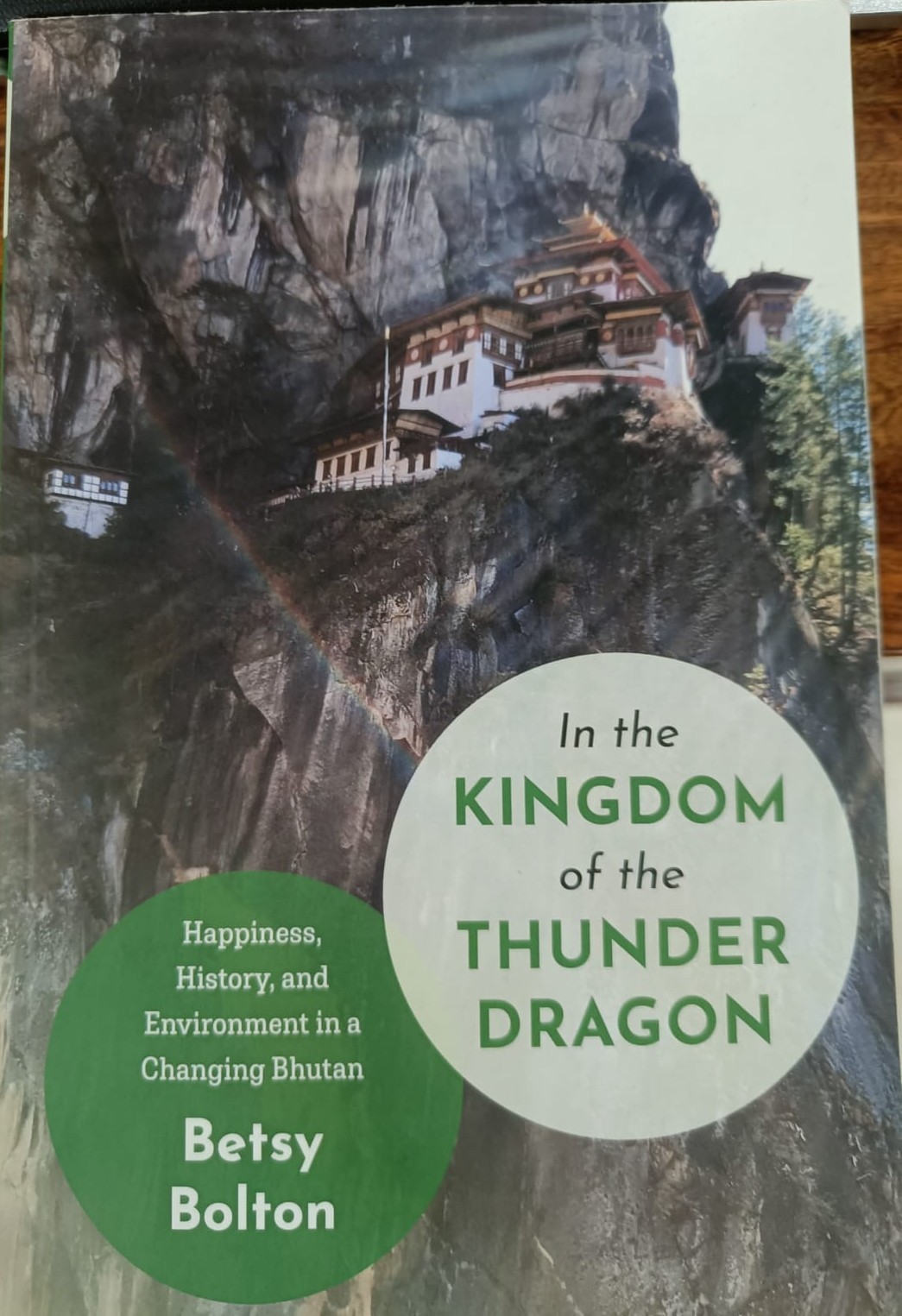
In the Kingdom of the Thunder Dragon: Happiness, History, and Environment in a Changing Bhutan by Betsy Bolton who was a Fulbright Scholar to Morocco in 2013-2014 and Bhutan 2017-2018.
One picks up a book on Bhutan expecting to find a sort of Shangri-La with gentle Himalayan people, an enchanting mountain landscape with ideally preserved flora and fauna. For me personally, living in India, I envisaged any book on this beautiful neighboring kingdom, especially one written for the general reader, as a delightful experience that will take me to an enchanting country. But, hold on, I tell myself, not all accounts must be idyllic! And in truth, Betsy Bolton delivers little of what I expected. Instead, every aspect of the country is put to the severest litmus test, and nothing is taken for granted—from Bhutan’s democratic monarchy to its sustainable development projects, even to the innovative idea of Gross National Happiness (GNH).
Among the questions she sets out to explore are these: Was Bhutan’s constitutional, democratic monarchy more authoritarian or more democratic? What led to the expulsion of tens of thousands of ethnic Nepalis from Southern Bhutan, the Lhotshampa crisis? Was Bhutan’s framing of GNH just “ideological cover” for ethnic discrimination? Some of these questions leave one with reservations: If a monarch with absolute right to rule introduces a democratic electoral system, should he be considered authoritarian? Likewise, GNH measures the happiness of the people not in purely economic terms, like the GDP, but in terms of their satisfaction with their livelihoods, education, conscious governance, spiritual opportunities, relationship with the environment, and material comfort. Why should it be a “cover for ethnic discrimination?”
Delineating the profoundly significant role of the monarch, Bolton notes, “The Raven Crown is a symbol of responsibility to create peace and happiness for the people in the kingdom” (77). Yet the King’s legitimate wish to decentralize power, vested in his position through a national Assembly, a council of ministers, has been met in Bhutan with counter arguments. The argument was that electoral power would create a multiplicity of allegiances and divisive politics based on regionalism and communalism, thereby undermining the sovereignty and security of the state. The power vested in members of the Assembly led to a crisis of confidence, so that they felt they were “overburdened by an unbearable load” and that it was like “asking a child to carry a spear before he can even carry an arrow” (96). Many thought that introducing the democratic system was premature and that Bhutan wasn’t ready. So the King’s wish is fraught with contradictions, and this too, is a transitional phase before Bhutan settles down to being a democratic monarchy.
Bolton also questions Bhutan’s innovative concept of Gross National Happiness, taking the ethnic divisiveness in Southern Bhutan, the Lhotshampa expulsions, into account. Yet the ethnic diversities and conflicting interests of South Asia make it difficult to allow for an absolute cultural integration. If there is any middle path that could have been adopted in such a situation, it is hard to say, but many countries, including the United States, have had a history of such ethnic and racial conflicts. The history of the Unites States is scarred when it comes to the suppression of Native American culture, for example. A different but comparable situation is the discrimination that African Americans face to date in the US. Indeed, Bolton seems to be unduly severe on Bhutan here.
A visit to the College of Zorig Chusum, where the arts of painting, wood carving, weaving, and hand and machine embroidery are taught, allows Bolton to showcase the rich handicrafts that are so vibrant a part of all Buddhist cultures. She also visits the Tiger Nest monastery where Padmasambhava, the Guru Rimpoche, meditated, having flown to this precarious perch atop sharp cliffs on the back of his disciple Yeshe Tshogyel who took the form of a flying tiger to bring him there. Bolton’s trek from Ranjungt to Sakteng provides a more personal narrative.
In fact, one wishes there were more such personal accounts in the book, rather than the large section of academic research that forms its crux because, for all the analyses, one doesn’t quite get the answers to the questions that might interest most readers: What is the landscape and terrain like? What are the major species of fauna that have been preserved due to environmentally conscious development? What are the traits of the Bhutanese as a people? What are relationships like between men and women? What about birth, courtship, marriage and death rituals and what are the major festivals? How does Buddhism impact the collective cultural life of the country? What is the Bhutanese attitude to food, considering that cuisine is important to any culture. What is their most iconic dish, ema datshi, like?
“Goes to the heart of most issues relating to Bhutan with an incisive perception.”
Be that as it may, this is an account that goes to the heart of most issues relating to Bhutan with an incisive perception that takes nothing for granted and assumes nothing. It makes for reading which is more analytical if you’ve assumed that it will be a romanticized Shangri-La image of the Himalayan kingdom— but as a research document, it is remarkable.
Bolton, Betsy. In the Kingdom of the Thunder Dragon: Happiness, History, and Environment in a Changing Bhutan. Ann Arbor, Michigan, Lever Press, 402 pp. $32.99.
Biography
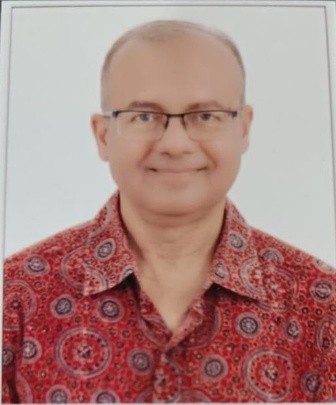
Vijay Prakash Singh was a Professor in the Department of English & Modern European Languages at the University of Lucknow, India, and held the chair from 2016-2019. From 2019-2020, he was a Fulbright Scholar to Claflin University, a leading HBCU in South Carolina. He has published in Indian and international journals and written travelogues (Mountain Travelogues on the Himalayas and Tibet) and two collections of short stories, most recently, A Secret Life on the Alaknanda (2023). Singh is an inveterate traveller, and his favorite destination is the Himalayas. He can be reached at vinjayprakash.lu@gmail.com.