
Fulbright Chronicles, Volume 4, Number 3 (September 2026)
Author
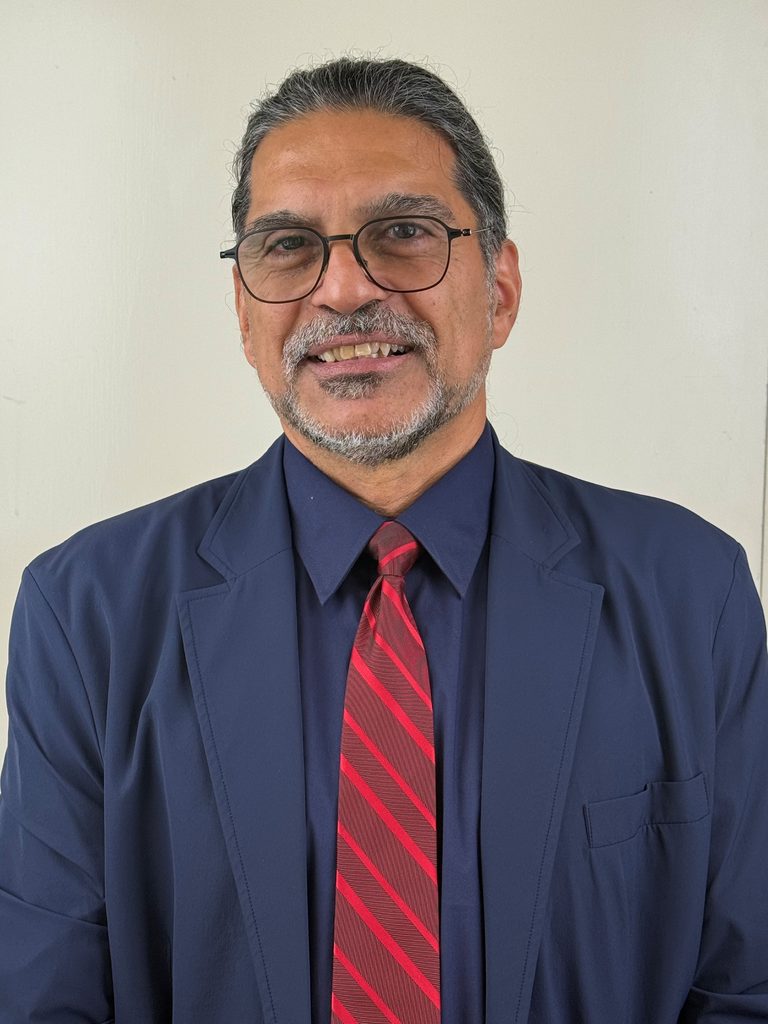
George Antoniou
Abstract
This article reflects on my experience as a Fulbright Scholar at the University of Tirana, where I worked with faculty, administrators, government agencies, and international partners to develop a university-wide AI and Ethics course and design a proposed Master’s program in Cybersecurity. The residency took place during a period of rapid technological change in Albania, creating a shared space for collaboration and dialogue about responsible AI, cybersecurity capacity, and the expectations of modern higher education.
Keywords
artificial intelligence • artificial intelligence ethics • cybersecurity education • curriculum development • international academic collaboration
Introduction
At the beginning of my Fulbright Scholar residency (February 10–June 10, 2025) at the University of Tirana in Albania, I was eager to contribute but unsure of what I would encounter. Albania is in the midst of strengthening its digital infrastructure and bringing its academic programs into closer alignment with European Union (EU) standards. I hoped the work I would do there would fit into that national push. At the same time, I felt the weight of representing both my home institution, Lynn University, and the Fulbright Program as I entered a large public university environment with an academic culture I did not yet fully understand.
Before arriving, I was unsure how I would handle the size of the University of Tirana and its academic bureaucracy while still meeting my Fulbright goals. I didn’t yet understand how faculty, students, and administrators worked together, and I was not sure how quickly I would adjust or find my place. Those early uncertainties ultimately shaped my willingness to listen more deeply, observe more carefully, and approach each task with humility.
The size of the university became clear right away: thousands of students, many faculty members, and several levels of administration. Moving through this environment, I gained a strong appreciation for how hard the faculty worked to support their students, even with limited resources and heavy teaching loads.
From my first days there, I was struck by the energy and openness of the Department of Informatics. Our work quickly moved beyond the classroom and grew into curriculum planning, faculty workshops, and broader discussions about cybersecurity and artificial intelligence (AI) ethics at the national level. What developed was a genuine academic partnership, one that now continues through a formal Memorandum of Agreement between Lynn University and the University of Tirana.
Foundations in the Department of Informatics
The Department of Informatics became the place where all of our major initiatives took shape. The faculty showed a genuine eagerness to expand their work in AI, data governance, cybersecurity, and other fast-moving technologies. Early meetings with the Vice Rector, the Dean, and Informatics leadership revealed a clear institutional desire to build a shared understanding of ethical AI and to embed these principles across the university. Our conversations in the department eventually grew into the idea that sparked the university-wide AI and Ethics initiative.
One moment of self-doubt came early, when I was introduced to the expectations around Bologna accreditation. The structure of syllabi, contact hours, lab requirements, assessment types, and even the timing of exams differed significantly from my experience in the United States. Students could sit for exams in later sessions, courses carried specific European Credit Transfer and Accumulation System (ECTS) weighting, and documentation required exact formatting. These unfamiliar elements made me feel briefly in over my head. But rather than slowing progress, they pushed me to learn quickly and to work more closely with my Albanian colleagues to ensure accuracy and alignment.
Developing an AI and Ethics Course for All Students
One of the most significant achievements during my Fulbright residency was contributing to the development of a proposed university-wide course on AI and Ethics, a requirement that would eventually serve all first-year students at the University of Tirana. This initiative emerged from repeated conversations about the accelerating use of AI tools by students and faculty, and the need for a shared ethical foundation across disciplines.
The Vice Rector, the Dean, and the Informatics faculty recognized that responsible AI education could not be limited to computer science or engineering students. The course was designed to bridge technical, social, philosophical, and regulatory perspectives while remaining accessible to students from economics, humanities, law, social sciences, and health sciences.
During the drafting process, I spent many hours working with faculty on learning outcomes, Bloom’s Taxonomy alignment, and open-access literature choices. Meetings often took place over strong coffee in nearby cafés, a hallmark of Albanian academic culture, where we discussed content, academic integrity concerns, AI-driven learning tools, and how to prepare students for a future shaped by automation and digital decision-making.
By the time my Fulbright term ended, we had completed the full curriculum and sent it into the University of Tirana’s review process. Conversations with the Vice Rector, the Dean, and department leaders continued even after I returned home, and those discussions helped set the stage for something larger: the effort to create a university-wide AI ethics policy. This ongoing collaboration reflects a shared understanding that responsible AI requires both academic preparation and institutional guidance. Working together, we continue to refine these frameworks so that they can support students, faculty, and the wider academic community in the years ahead.
Building a Cybersecurity Master’s Program
My residency also focused on developing a proposed Master’s program in Cybersecurity for the Department of Informatics. Albania’s national priorities in digital security, EU integration, and cyber readiness became central themes in our design work. Faculty and administrators emphasized the urgent need for a graduate program that would prepare professionals to protect critical infrastructure, support public institutions, and contribute to the nation’s growing digital economy.
A pivotal moment occurred during a meeting with the Head of the Department of Informatics and officials from the Ministry of Defense’s Security Operations Center (SOC). They highlighted the importance of aligning higher education with EU digital security frameworks, including recommendations from the European Union Agency for Cybersecurity (ENISA), and we discussed recent cyberattacks that had temporarily disrupted Albania’s e-government services. The discussion eventually touched on North Atlantic Treaty Organization (NATO) readiness, Albania’s regional responsibilities, and the expectations placed on cybersecurity professionals who must understand both technical issues and policy. These conversations influenced my decision to incorporate governance, regulatory standards, and national cyber policy into the curriculum.
Creating the program pushed me to adapt quickly. The Bologna Framework had very specific expectations for credits, syllabi, lab requirements, and assessments, and it took steady effort to understand how all of it worked together. There were times when I wasn’t sure I had interpreted a step correctly. With the Head of the Department of Informatics and the Master’s program coordinator helping me work through each step, we prepared all of the required components, including course outlines, syllabi, lab plans, assignments, reading lists, and the documents needed for review by the university and the ministry.
Faculty Development and Cross-Sector Collaboration
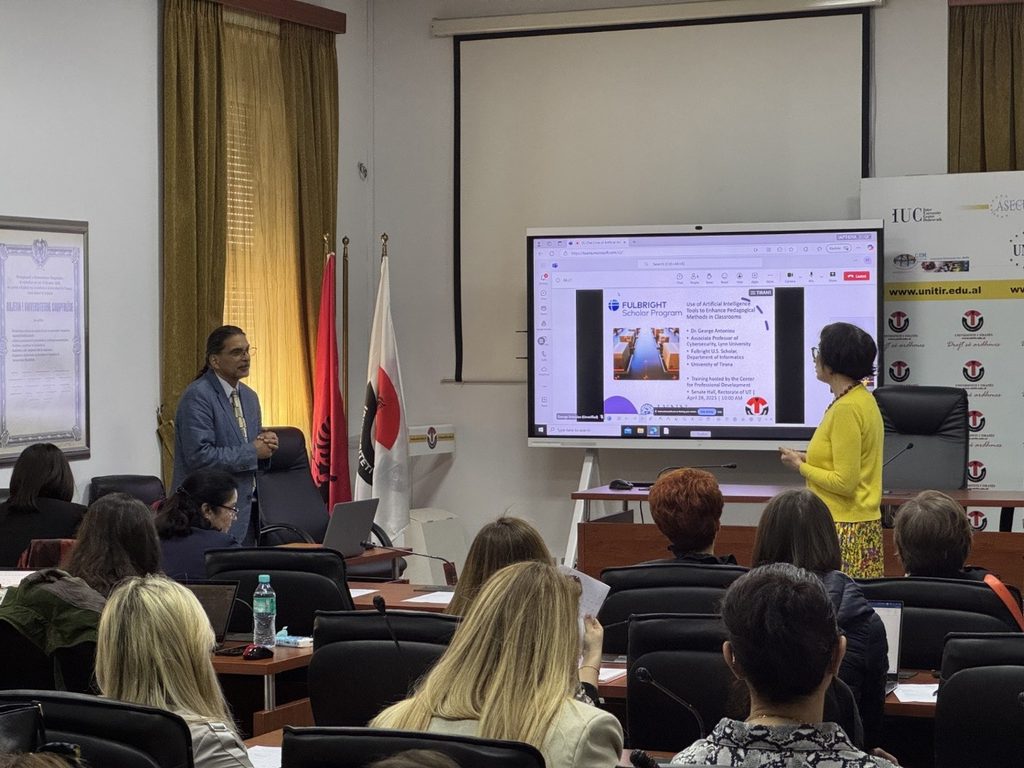
Supporting faculty development became an important part of my Fulbright work. The workshops I led on AI tools for teaching, ethical considerations around students’ use of AI, and the basics of cybersecurity brought together faculty from a range of disciplines. Their interest and curiosity stood out. They raised difficult questions, voiced real concerns, and showed genuine commitment to bringing responsible AI practices into their own classrooms.
Collaboration outside the university also added depth to the experience. I met with the U.S. Embassy’s Public Affairs team, whose support aligned closely with the project’s educational goals, and I continued my work with MITRE Corporation, whose insight shaped many of the cybersecurity discussions. One moment that remains vivid was attending the opening of the NATO Regional SOC for the Balkans. Leaders from the Ministry of Defense, NATO, and the U.S. spoke openly about Albania’s expanding role in regional cyber defense. Hearing those perspectives made it clear that students must be prepared not only for technical skills but also for policy and governance.
Collaboration was not limited to the university setting. My landlord often offered homemade food, and faculty members frequently asked me to meet for coffee to talk through ideas or concerns, something that became a regular and enjoyable part of my routine. One weekend stands out clearly. The Head of the Department of Informatics and her family took me to their cottage in the countryside outside Tirana, where we shared fresh produce and had lunch on a hillside while discussing landownership issues that still bear the traces of the communist period. Experiences like that helped me see deeper layers of Albanian society and the lived experiences behind ongoing reforms.
Cross-Cultural Impact and Ongoing Partnerships
The cultural setting influenced academic work far more than I expected. Albania’s public education system functions at a different pace than the one I’m used to in the United States, with its own structure and levels of oversight. New academic programs go through multiple rounds of review, first at the university and later at the Ministry of Education. I visited classrooms where blackboards and chalk were still being used, and faculty often worked with older tools while trying to integrate more modern methods. What impressed me most was how receptive people were. Faculty and students were eager to share ideas and work together, and that spirit had a strong influence on my time there.
A challenge came when I realized the new Master’s program would not complete the approval process before my Fulbright term ended. That was disappointing at first. Once I understood the rhythm and procedures of Albania’s public education system, I was able to adjust my expectations and focus on what could be accomplished within the timeframe. With support from the Head of the Department of Informatics and the Master’s program coordinator in the Faculty of Natural Sciences, I concentrated on completing a curriculum package that met all requirements and could continue moving through the approval process after I left.
The connections built during my residency have remained strong. Lynn University and the University of Tirana formalized a Memorandum of Agreement, and we are now discussing study abroad options, faculty exchanges, and shared research. I stay closely connected with my colleagues in Tirana and continue offering support virtually. My time in Albania reshaped my understanding of global education, deepened my commitment to cross-border academic collaboration, and enriched my teaching in the United States.
Reflection on Scholarship and Professional Growth
“Innovation does not always come from advanced tools or large budgets; in Tirana, it often came from persistence, creativity, and genuine curiosity.”
My time in Albania reshaped the way I think about teaching cybersecurity and AI ethics. Working inside a public university system that balances emerging digital demands with limited resources pushed me to reconsider what effective instruction looks like in diverse settings. I returned to Lynn University with a deeper appreciation for how cultural context influences student learning, classroom expectations, and institutional priorities. The collaboration also reminded me that innovation does not always come from advanced tools or large budgets; in Tirana, it often came from persistence, creativity, and genuine curiosity. Those months broadened my sense of what academic partnership can accomplish and continue to influence how I design courses, mentor students, and engage with international colleagues today.
Connecting to the Fulbright Mission
Throughout the residency, I was reminded of how central the Fulbright mission is to building bridges between institutions and cultures. Much of the work in the University of Tirana’s Department of Informatics involved translating ideas, between languages, between academic systems, and between different expectations for technology’s role in society. These exchanges went far beyond curriculum design; they became moments of mutual understanding that revealed both shared challenges and different ways of addressing them. The collaboration between Lynn University and the University of Tirana continues because the relationships formed were built on trust, respect, and a willingness to learn from one another. In that sense, the Fulbright program served not only as the catalyst for this project but also as the framework that made long-term partnership possible.
Further Reading
- European Commission. “Ethics Guidelines for Trustworthy AI.” High-Level Expert Group on Artificial Intelligence. 2019. https://digital-strategy.ec.europa.eu/en/library/ethics-guidelines-trustworthy-ai.
- MITRE Corporation. “MITRE ATT&CK Framework.” 2023. https://attack.mitre.org/.
- NATO Cooperative Cyber Defence Centre of Excellence. “Annual Report 2023.” Tallinn: CCDCOE, 2023. https://ccdcoe.org/library/publications/.
- Organisation for Economic Co-operation and Development. “OECD Framework for the Classification of AI Systems.” Paris: OECD, 2022. https://oecd.ai/en/classification.
- UNESCO. “Recommendation on the Ethics of Artificial Intelligence.” Paris: UNESCO, 2021. https://unesdoc.unesco.org/ark:/48223/pf0000380455.
Biography
George Antoniou is an Associate Professor of Cybersecurity Management at Lynn University in Florida. As a 2024–2025 Fulbright Scholar (Grant from February 10, 2025, to June 10, 2025) at the University of Tirana’s Department of Informatics, he collaborated with faculty and national partners to develop a proposed university-wide course in AI and Ethics, design a Master’s program in Cybersecurity, and support broader efforts in responsible technology and digital readiness. His work continues through a formal partnership between the two institutions. His teaching and research focus on ethical artificial intelligence, cybersecurity education, and global collaboration. He can be reached at gantoniou@lynn.edu.