
Fulbright Chronicles, Volume 4, Number 3 (September 2026)
Author
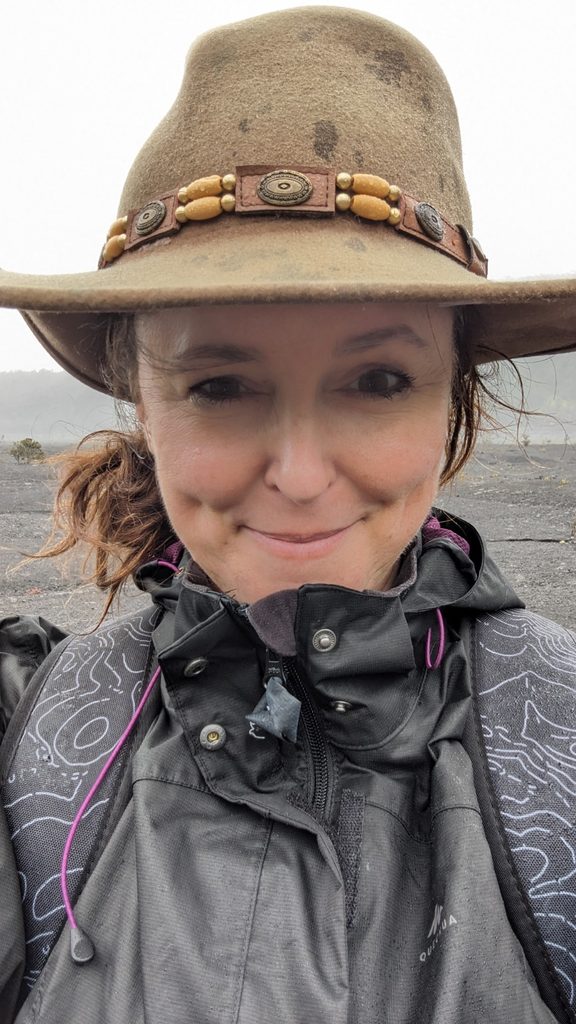
Karen S. Barton
Abstract
As the first Fulbright Scholar in Cabo Verde, I arrived knowing that my role would be both energizing and uncertain. What began as a maritime geography proposal developed into a broader engagement with agriculture, water harvesting, and emergency coordination after the unprecedented August 11, 2025 flood event. This experience reshaped my mid-career trajectory with a greater focus on peace and diplomacy, demonstrating that Fulbright programs can redirect even established scholars, opening unanticipated directions in teaching, research, and international collaboration.
Keywords
West Africa • agriculture • soft diplomacy • education • disaster response
Introduction
When I received word of my Fulbright Scholar award to Cabo Verde, I understood immediately that the assignment carried unusual weight. I would not only conduct research but also inaugurate the program in a country that had never before hosted a US Fulbright Scholar. The US Embassy in Praia played a central role in preparing me for that responsibility, offering practical guidance and contextual insight on how to engage in an academic partnership where none yet existed. Their engagement made the task of being the first feel less solitary and more collaborative. With no predecessors to consult and no existing framework to follow, every decision became part of a larger act of translation between systems of knowledge and expectation. I was ready for the task.
Being the first Fulbrighter in any country carries a certain dual responsibility: to represent a program’s ideals while helping to define its local shape. In Cabo Verde, this meant serving not only as a researcher but also as a bridge between institutions, a facilitator of mutual understanding, and at times an informal cultural ambassador. Every exchange, whether with faculty, administrators, or community leaders, was part of a broader introduction, not only to me as an individual but to the Fulbright mission itself. This sense of responsibility gave the experience both gravity and creative freedom. With no established template, there was room to imagine what an exchange could look like in a small island nation navigating globalization, climate change, and educational reform. When the opportunity in Cabo Verde appeared, a newly opened program in a country that had never hosted a Fulbright US Scholar, I felt an immediate sense of possibility. What had once seemed a professional detour soon became a chance to contribute to something foundational, to help shape what Fulbright could mean in a new national context.
Before my departure and in preparation for the grant, I studied the marine geography, renewable energy initiatives, and political ecology of the islands, drawing on prior work in nearby Senegal. That earlier regional experience, supported through both a Fulbright-Hays award and a National Endowment for the Humanities fellowship, had deepened my understanding of the Atlantic and Sahelian interface and provided a useful comparative framework for Cabo Verde. Yet even with that foundation, the daily realities of island life required a new kind of adaptation. Cabo Verde lies roughly 350 miles west of Senegal and comprises ten volcanic islands, each with its own dialect, rhythm, and microclimate. Santiago hosts the capital, Praia; São Vicente, where I was based, is known for its maritime history; neighboring islands range from the green terraces of Santo Antão to the flat, arid landscapes of Sal and Boa Vista. Historically an Atlantic crossroads for Portuguese navigation and a hub of migration connecting Europe, Africa, and the Americas, the archipelago’s daily life is defined by the ocean—and its survival by the absence of rain. Geography demands adaptation, an idea that would come to shape every dimension of my Fulbright work.
My project was anchored at the Atlantic Technical University (UTA) under the leadership of my host, President João do Monte Duarte, where I planned to study marine ecosystems and renewable energy. I anticipated spending most of my time at sea. However, within weeks my attention shifted to the arid interior landscapes and the people striving to sustain them. In addition to my academic research for a book project, I taught English at the Mindelo “American Space,” a US government–supported initiative that fostered dialogue and cross-cultural exchange.
From the Sea to Land
In the early weeks, the gap between my original proposal and local priorities quickly became clear. Water dominated nearly every conversation with community leaders, given the way it shapes both everyday livelihoods and outlooks. On São Vicente, residents spoke more about the absence of water than the abundance of ocean. I began to reconsider how my Fulbright could respond to this reality, drawing on support from colleagues at UTA to explore low-cost, decentralized technologies for capturing water and energy.
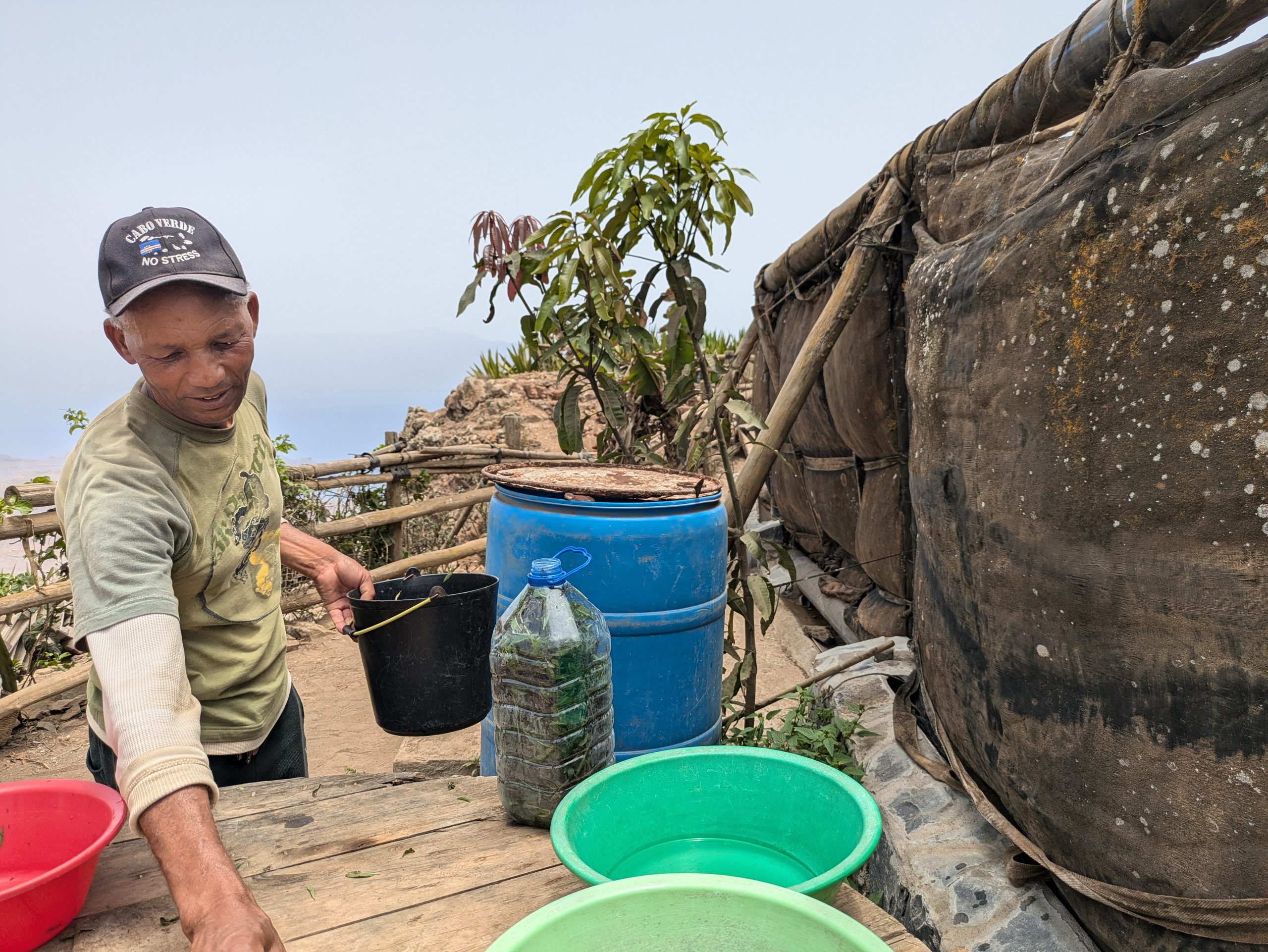
My initial focus was on fog-collection systems, simple mesh installations that harvest moisture from passing clouds at altitude. Already used in parts of North Africa and South America as well as on the island of Santiago, these systems offered promise for Cabo Verde’s highland microclimates. Working with local mechanical engineer Dr. Marco Cruz, we assessed optimal placement, material availability, and maintenance feasibility on the island of Santo Antão. Our goal was not to import solutions but to identify what could be adapted, scaled, and sustained locally. With the same UTA colleague, I also studied small-scale biodigesters and other decentralized energy systems, finding parallels between rural Cabo Verde and rural Colorado and identifying ways biodigesters could complement local waste-management and agricultural practices. Dr. Cruz’s technical insight and collaborative spirit strengthened our research and later became central to several joint grant proposals. It led to detailed field notes and new project ideas connecting water harvesting, soil restoration, and renewable energy.
Community Engagement and Writing
The American Space in Mindelo, where I taught English, quickly became more than a workspace; it evolved into a center for discussion and coordination. Here I collaborated with graduate students from across disciplines (including elementary education, environmental studies, and poetry) and one of them would later join a writing project with me. At the same time, I coached several members of the local dive crew and neighborhood youth in long-distance ocean swimming. What began as a casual request turned into regular lessons that combined technical training with ocean safety, communication, and teamwork.
These interpersonal relationships expanded my understanding of community resilience and informal education, illustrating how learning often takes place beyond classrooms or formal institutions. I also dedicated much of my Fulbright period to writing, developing chapters for a forthcoming book and producing numerous grant applications for National Geographic, the US Embassy, and the University of Northern Colorado (UNC). Most of these proposals focused on linking water and energy security to sustainable livelihoods which would, in turn, prevent outmigration. Other proposals explored ways to connect Cabo Verde to regional research networks across West Africa. Writing became both a form of analysis and a way to build institutional capacity for local partners.
The Flood of August 11
“What began as fieldwork became an exercise in diplomacy under pressure.”
On August 11, the arc of my Fulbright would shift dramatically as the island of São Vicente experienced an unprecedented storm. Torrential rains transformed streets into rivers, eroded roads, and flooded low-lying neighborhoods. The system that later intensified into Hurricane Erin had reached us in its formative stage. Because of prior work in disaster management in Nepal with the Institute for Crisis Management Studies, I was drawn into local coordination efforts for disaster recovery. Students, divers, and neighborhood volunteers organized cleanup and response teams. We cleared debris, assisted older residents, and relayed information to the US Embassy in Praia, which became a crucial communication hub across islands. After the waters receded, colleagues and I created our own community impact network, bringing together collaborators from Cabo Verde and around the world using WhatsApp. The network grew from informal exchanges into a global coalition of faculty, students, and NGOs dedicated to preparedness and recovery. Though entirely unfunded, it functioned through shared commitment and open communication. I believe this collaboration, more than any planned research activity, embodied the Fulbright mission: intercultural understanding, service, and partnership in the face of uncertainty. What began as fieldwork became an exercise in diplomacy under pressure, teaching me that crisis management is central—not peripheral—to understanding how communities’ function amid unpredictability.
Building a West African Network
Following the storm, the US Embassy supported my plan to create broader regional engagement and build bridges. While many Cape Verdeans maintain cultural ties to Portugal and the United States, contact with mainland Africa remains limited because of transport constraints and historical orientations. Working with the Embassy and UTA, I organized a delegation from Mindelo to Dakar, Senegal, where I had previously completed a Fulbright-Hays program. The visit was designed to bring together institutions confronting similar challenges in renewable energy and dryland agriculture. For some, it was their first journey to the African mainland, carrying deep emotional significance. Back in Cabo Verde, we collaborated on multiple grant proposals to sustain these partnerships. Through this process, UTA established an enduring relationship with my home institution, the University of Northern Colorado. Although our geographic contexts differ (an island nation and a landlocked rural region) both communities face analogous concerns related to aridity, soil degradation, and migration. The collaboration showed that exchange can occur horizontally, between peers confronting similar ecological challenges, rather than only vertically through donor frameworks.
Working in an Archipelago
Conducting research and coordination across an archipelago required enormous patience and flexibility. Inter-island travel was often disrupted, cargo shipments delayed, and meetings dependent on the unpredictable schedules of ferries and flights. I learned to see these interruptions not as problems but as intrinsic to island life, shifting from in-person meetings to phone calls, or from formal lectures to outdoor discussions under shade trees. Isolation was a more personal challenge, but over time, reliance on colleagues, neighbors, and students created a new form of community, and collaboration came to feel like both a technical and a social skill.
From Fieldwork to Diplomacy
The flood response and the resulting collaboration with the US Embassy has also profoundly influenced my professional goals. Watching diplomats manage crises and weigh logistical constraints against human needs showed me that diplomacy is less a distant profession than a practical tool grounded in strong communication and empathy. Upon returning to the United States, I decided to pursue formal study in peace and diplomacy. I was accepted into the Rotary Peace Fellowship at Makerere University in Uganda, a competitive program culminating in a social-change initiative. My project builds directly on the Cabo Verde experience, linking my Colorado campus with West African partners to foster training in mediation and environmental dialogue. I also enrolled in the University for Peace and UNITAR Graduate Certificate in Diplomacy and Development, a United Nations–affiliated program that emphasizes negotiation, conflict prevention, and sustainable development. Together, these programs let me integrate environmental geography with peace studies, extending my focus from analysis to application. My long-term objective is to establish a Center for Citizen Science, Peace, and Diplomacy connecting Colorado and West Africa through research, teaching, and community engagement. The center would use geographic analysis, mapping, and participatory dialogue to support constructive exchanges across cultural and environmental boundaries. The inspiration for this effort traces directly to the Fulbright experience in Cabo Verde, where diplomacy emerged not as an abstract skill but as a grounded practice of listening, translating, and coordinating amid uncertainty.
Reflections on Impact and Continuity
Cabo Verde revealed that adaptation is both environmental and human. Projects such as fog nets and decentralized systems reflected physical resilience, but the deeper experiment was social learning to collaborate across unfamiliar institutions and cultures. Each challenge, from resource scarcity to isolation, required improvisation and humility. Working with the Embassy reshaped my understanding of education and leadership. Diplomacy, I realized, extends beyond government practice; it occurs whenever people bridge differences to pursue shared goals. The move from disaster management to diplomacy was not a career shift but a natural evolution. Geography, I learned, includes the spaces between people as much as the land itself.
These lessons now shape how I teach and mentor. Geography for me has become inseparable from empathy and negotiation, informed by the realities of limited infrastructure and diverse perspectives. Collaboration often meant adapting to context—teaching outdoors when power failed, finding bilingual ways to share science, and learning how students linked environmental change to family history. These experiences showed that global learning begins with the realities of place, and that resilience and diplomacy share a common root in care, built through listening, trust, and sustained relationships.
Conclusion
Serving as the first Fulbrighter in Cabo Verde was both a privilege and a challenge. It meant representing a global program while constructing its foundation locally. What began as a study of maritime systems gradually became an inquiry into human networks, the ways knowledge circulates between sea and soil, laboratory and community, island and world. The experience reaffirmed that international exchange succeeds not through rigid adherence to plans but through openness to adaptation. From the fog-collection ridges to the flood-recovery brigades, my community-engaged work underscored that collaboration and empathy form the social infrastructure of global engagement. Fulbright did more than extend my professional path; it transformed it. It reminded me that reinvention remains possible at any career stage and that the spirit of exchange is as relevant in midlife as it is at the beginning of an academic journey. The transition from disaster to diplomacy began on a small Atlantic island, yet its lessons will continue to shape how I teach, conduct research, and build partnerships across communities today.
Further Reading
- Carling, Jørgen, and Lisa Åkesson, eds. Mobility and Development: African Experiences in a Global Context. Leiden: Brill, 2019.
- Instituto Nacional de Meteorologia e Geofísica (INMG). Relatório sobre as Condições Climáticas e Recursos Hídricos de Cabo Verde 2022–2023. Praia: INMG, 2023.
- Rotary International. Peace Fellowships at Makerere University. Rotary Peace Centers, 2025.
- United Nations Development Programme (UNDP). Cabo Verde: Climate Change Adaptation and Sustainable Development Strategy. Praia: UNDP Cabo Verde Office, 2023.
- University for Peace and UNITAR. Graduate Certificate in Diplomacy and Development. Geneva and San José, 2024.
Biography
Dr. Karen S. Barton is a geographer and educator advancing community-based climate solutions. A Senior Faculty Member at the University of Northern Colorado, she teaches climate change, sustainability, and geographic literacy. Her research explores community adaptation and disaster resilience in Cabo Verde, including fog harvesting and local coordination. Author of two books on natural disasters and human impacts, she blends geography, storytelling, and participatory research to amplify underrepresented voices. A Rotary Peace Fellow and Fellow of The Explorers Club and Royal Geographical Society, she is funded by Fulbright, the Swiss Red Cross, and the National Endowment for the Humanities. She can be reached at Karen.Barton@unco.edu.