
Fulbright Chronicles, Volume 4, Number 3 (September 2026)
Author
Erika Mariana Almenara
Abstract
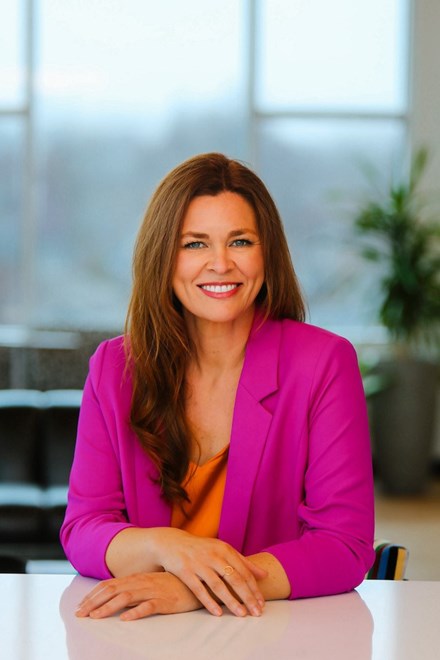
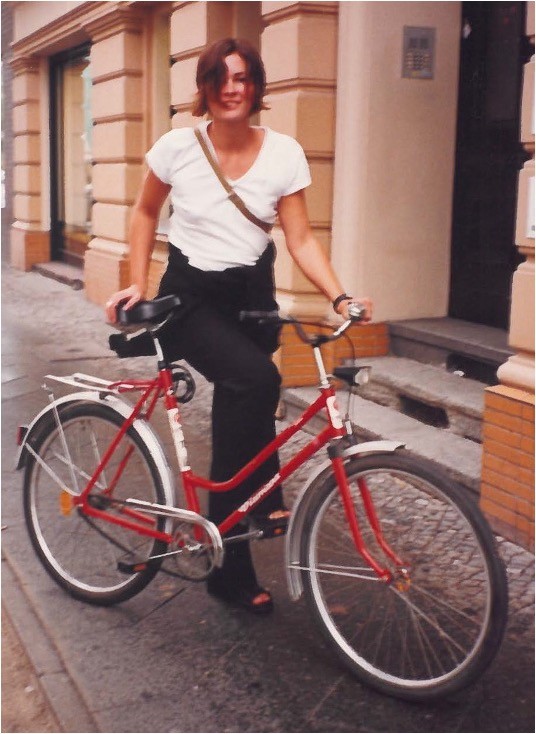
Stephanie Ricker Schulte is an Associate Dean of Fulbright College at the University of Arkansas. In 1998, she won a Fulbright award as an English Teaching Assistant (ETA) to teach English in Berlin.
The Fulbright experience for Schulte was more than transformative; it was a lesson in disagreeing with compassion while dancing and creating with the hands of many. In this interview, Schulte reminds
us of the power of connecting with others, especially those who are different from us, and the opportunity to build peaceful connections through exchange.
Keywords
Berlin • international exchange • compassion • global change • communication
Introduction
Stephanie Ricker Schulte is an Associate Dean of Fulbright College at the University of Arkansas. Schulte joined the Department of Communication at the University of Arkansas in 2008, where she also served as a faculty member, vice chair, and chair. Her research explores communication technologies, popular culture, and transnational media policy and examines the multidirectional relationships between technological design, American culture, and policymaking. In 1998, she received a Fulbright English Teaching Assistant award (ETA) to teach English in Berlin. The ETA program places Fulbrighters in classrooms abroad to assist local English teachers and serve as cultural ambassadors for the United States
In this interview, Schulte discussed her Fulbright experience not only as a transformative experience but also as a lesson in disagreeing with compassion. She believes this translates into global change. Schulte reminds us of the power of connecting with others, especially those who are different from us, and of the opportunity to build peaceful connections through exchange. An openness that reminds us that when we get to know people, we see them as humans. Schulte invites us to remember that below every idea, every disagreement, is another complex human trying to communicate and express their own culture, ideology, and perspective.
Interview: August 1, 2025
1. Why did you choose Fulbright rather than another programme or award?
I was in a unique position because I knew people who knew Fulbright personally. I also knew about his complex history, about his impact, about his program because I was a student in Fulbright College. I was attending classes in the building where he studied in the town where he is buried. I really agreed with the idea of peace through education, peace through international contact, and the idea that bringing people together at individual levels could eventually translate into global change.
I was already a believer in the program before I applied, in part because I was raised with an awareness of him. But, I did a teaching Fulbright because I believed my most significant impact would likely be through working with young people. As a teaching Fulbright, I knew I would be able to interact with many students at a school, learn from them and their perspectives, and offer whatever cultural perspectives I could bring.
2. Could you elaborate on your belief, and Senator Fulbright’s belief, in peace through education? How did that central idea shape your experience?
I believe, as Senator Fulbright believed, that when you get to know individuals from other places, you see them as human and “turn nations into people;” you learn their complexities, you come to better understand their cultures, meaning, ideologies, perspectives, politics through human interaction. I know that is a slow, one-to-one process, but it is the way real, lasting change happens. I wanted to be a part of that bigger project. I also had language abilities in German and knew the German Fulbright was one of the oldest and most established. I was lucky enough to go to Berlin, which is an interesting place with a rich history. I was on the former East Side when I was teaching, which was its own unique experience in the late nineties. It was an incredible opportunity, it was life-changing.
3. How did the experience transform you? What lasting influence did Fulbright have on your life and work?
It feels like it changed my DNA in that it changed the way that I think, the way that I see people and the world. It changed my value system. I learned so much about America by being in Germany. I came back with a different perspective on the environment in which I was raised, which allowed me to approach my view of myself, my role as a citizen and community member, and my career in new ways.
I ended up studying transnational American studies, studying the role of America in the world historically and culturally. I moved to Washington, D.C. and while I finished my degrees, I worked in several organizations, including Radio Free Asia and the Washington Post.
When I came to the University of Arkansas, every class I taught in my home department of communication integrated international perspectives. I also taught in cultural studies, a discipline that has a highly cross-national history itself and an area at the University of Arkansas that always had a very internationally diverse student population. It is one of the things I love about that program: it features people from around the world connecting about ideas, something that closely resembles the Fulbright Program. I ended up working for Fulbright College, where I am now. Our college’s motto is “peace through education,” so in my service to this mission, I try to think about how to fuse global studies and global awareness into our curriculum and into our state. As my colleague Laurence Hare often says, our college’s goal is to connect Arkansans to the world and the world to Arkansas.
4. Was this your first experience teaching a group?
I had taught individual classes and given individual lectures, speeches, or similar presentations, but I had never been responsible for a classroom for a long period of time before. I ran multi-week workshops, gave lectures, led exercises and activities, and I also organized many outside events, led groups, and did individual tutoring.
I was doing a lot of teaching but I was also doing a lot of learning and skill building. Because communities teach differently in different places, I learned many new teaching strategies, pedagogies, different type of instructional tactics. Those are all things that I learned there and brought back, many of which I employed when I became a teacher in the U.S.
5. Did you spend time with other Americans, or did you focus on meeting people from other countries?
I did not engage much with the American population while I was there. Some other Fulbrights were in different places in Germany, and we connected, we visited each other, and I had some people stay with me who were traveling Europe. But for the most part, I had a pretty immersive experience in Germany. I did that on purpose, to really embrace the opportunity of being abroad. I tried to travel as much as I could while I was there, either with people I met, with my roommates’ friends, or I would travel on my own just to see things.
I went to Greece with some students who were studying; they had a school break, and they asked me to go with them. We were all traveling on super tight budgets, so we slept outside, at campgrounds, and on trains. It was great, and you know I’m still connected with some of them on social media. I’m also still associated with one of the teachers that I taught with, and I’m definitely connected with friends that I met there. I go back and see them sometimes and one of them came to my wedding.
6. So, it was truly an exchange for both you and your students?
Yes, it was. I taught English, but I also taught culture classes, about Indigenous populations in North America, and about American history. I conducted cooking classes, we held a hip hop dance party, we worked through short story and newspaper article translations, watched films, advertisements, and TV shows, and listened to music together. They brought their favorite items to me, and we talked about them. They shared their cultural experiences and took me into their homes. It was very much an exchange, and it was challenging. One of the students I was supposed to tutor was a neo-Nazi affiliated student, which posed unique challenges.
7. How did you manage that relationship?
It was very interesting to hear his perspectives and his positions. It was challenging to connect with him, to find ways to communicate with him, in particular because I disagreed so fundamentally with him. That said, there are ways to disagree with people and still connect meaningfully, and that is what I tried to do. On my last day at the school, he brought me flowers. We were able to disagree, debate, and think about our differences in ways I thought were constructive. He learned English in the process. Hopefully, we both left with a bit more understanding about each other. It was very challenging and also very rewarding. I think the school was confused when he brought me flowers at the end because we had debated so much (laughing).
It’s hard to develop compassion for people with whom you disagree. But until you sit across the table from that person, you express what you think and listen to what they think, you cannot really connect and move forward. I believe interaction is key to compassion and that is something that’s part of what felt like a DNA change in Germany. This experience gave me the opportunity to become comfortable with disagreement. It was a moment where I saw its value and began to seek divergent opinions in a new way. That is a practice I still do and encourage my students to do. In this political moment, I wish we were all doing a little bit more of that.
“Without communication, connection is impossible.”
How can we hope to change each other’s lives if we are not listening to each other? Without communication, connection is impossible. I think you can disagree with someone, listen to them, and say, “I absolutely disagree with that,” and still respect the person. You can respect their agency to believe what they think, and you can absolutely disagree with what they’re saying. I think we’d be better off as a nation in the United States, if we did that more, if we were willing to really listen and confront disagreement, but retain basic respect and compassion. Those conversations are the only way we move forward.
8. How did you care for yourself while navigating the challenges of living away from family in a new environment?
I do think that any long-term study abroad is a resilience opportunity. You are tested, you are on your own, you are independent, and this was in the pre-Internet age. There were no cell phones or the internet in the way that we think about them now. There were many support networks in place at the school. I had a family that I lived with for a while until I moved out on my own. I had roommates, an East German and a Turkish immigrant. The three of us lived together in an apartment building in downtown Berlin. That was amazing because I learned about the Turkish community in Berlin and what their experiences were like. I learned about what the former East German experience was like from my roommate. He took me back to see his family for Christmas one year, and so I got to learn about their experiences as well. But it can be very challenging, isolating, and lonely. Any person who lives in a country that is not their own knows how difficult that can be.
9. Is there something from the Fulbright experience that influenced the traits of your personality? Did doing the Fulbright program awaken some of your talents, some of your gifts that you did not know, or think you did not know about yourself, took you to where you are and where you want to go?
When you’re teaching at Fulbright, you’re put into a leadership position. I was put in front of a classroom, and I had to do my best to rise to the challenge. I was terrified. I was terrified of speaking in a different language. I was terrified of teaching. I tried just to move forward. But I had to move forward through fear. I still do that all the time. I’m terrified a lot (laughing), but I try to keep going. I do not want to be a person who does not do things because I am afraid. Part of what that experience taught me was the value of moving through stressful situations, of not letting fear stop you. It was a terrifying thing to meet a person who is affiliated with national socialism. And it is terrifying to leave home for somewhere where people are different, speak a different language, and believe different things. I want to be a brave person. I’m not always (laughing), but I want to be a person who is.
10. What advice would you give a young person who is considering a Fulbright but remains uncertain about applying?
Oh, absolutely, go! Without question. You learn so much about yourself. It is a challenge but it is also growth. You confront yourself, you learn, and you give. It is a richly textured experience. For the students I was working with in those classes, I was mostly the first American they had ever met. Some of the teachers that I was working with had taught Russian and then became English teachers after the Berlin Wall fell. Many of them had a lot of questions about America, often really difficult questions. It was fantastic to wrestle with those questions, to research them, to learn about America from their perspectives, through the lenses of their experiences in the former East, their family relationships, and their politics. It is just transformative, so yes, go.
This interview, conducted in July 2025, has been edited for clarity and ease of reading.
Further Reading
- Allen, Mike, Robert H. Wicks, and Stephanie R. Schulte. “Online Environmental Engagement Among Youth: Influence of Parents, Attitudes and Demographics.” Mass Communication and Society 16, no. 5 (2013): 661–86.
- Maxwell, Angie, and Stephanie R. Schulte. “Racial Resentment Attitudes Among White Millennial Youth: The Influence of Parents and Media.” Social Science Quarterly 99 (2018): 1183–99.
- Wicks, Robert H., Jan LeBlanc Wicks, Shauna A. Morimoto, et al. “Correlates of Political and Civic Engagement Among Youth During the 2012 Presidential Campaign.” American Behavioral Scientist 58, no. 5 (2014): 622–44.
- Wicks, Jan LeBlanc, Shauna Morimoto, Robert H. Wicks, and Stephanie R. Schulte. “Are Religious Factors Associated with Political Consumerism? An Exploratory Study.” Journal of Media and Religion 16, no. 3 (2017): 81–92.
Biography
Stephanie Ricker Schulte is associate dean of Fulbright College at the University of Arkansas. She joined the university’s Department of Communication in 2008 and has served as a faculty member, vice chair, and chair. Her research examines communication technologies, popular culture, transnational media policy, technological design, American culture, and policymaking. She received a Fulbright English Teaching Assistant award to Germany in 1998. Interviewer Erika Mariana Almenara is the author of this interview.