
Fulbright Chronicles, Volume 4, Number 3 (September 2026)
Author
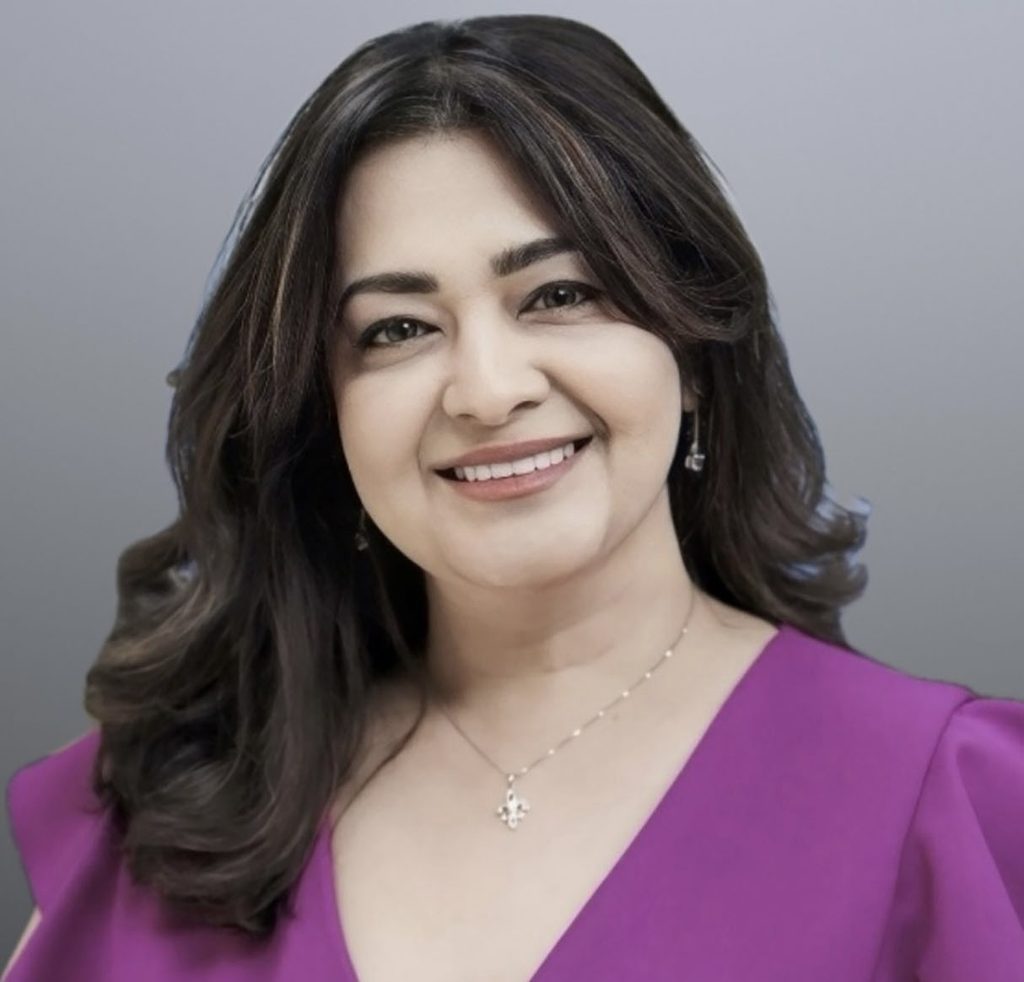
Monica Lakhwani
Abstract
This Fulbright reshaped my understanding of leadership through cultural immersion, indirect communication, and flexible planning. A Hanoi typhoon became a symbol of resilience, revealing communal strength and quiet determination, while work with the Vietnam National Institute of Educational Sciences (VNIES) deepened my appreciation for community and empathy. The experience underscored the value of presence over perfection and connection over control. It revealed leadership as a human-centered practice grounded in adaptability, shared experience, and mutual respect.
Keywords
leadership • policy and child rights • culture
Introduction
In 2022, I received my first Fulbright award, a Fulbright-Hays Scholar grant to the Philippines. That experience was transformative. As an educator, I had the opportunity to collaborate with and visit sixteen institutions across Manila and the greater Metro Manila region. The trip deepened my understanding of Southeast Asian education systems and left a lasting impression on my professional path. At the time, I never imagined I would have the privilege of engaging with a Fulbright award a second time.
After returning home from the Philippines, I decided to apply for the Fulbright Specialist roster with a sense of excitement about the possibilities ahead. The VNIES project’s blend of educational and governmental partnerships aligned perfectly with my interests. Over my tenure on the roster, I explored a range of projects, some familiar and others outside my experience; this one was well suited to my expertise.
Ultimately, I chose this project in Vietnam for several meaningful reasons. First, I currently serve as the Language Access and Community Impact Manager for city government, and this project provided me with an opportunity to merge my passion for education and research with my policy experience in the government sector. Second, my own city is home to a small but vibrant Vietnamese community whose members were willing to offer valuable cultural and contextual insight. Third, I had previously traveled within Southeast Asia and felt connected to the region’s shared histories and cultural values. Hence, Vietnam represented both a new challenge and a natural extension of my prior work. This second Fulbright opportunity allowed me to bring my knowledge, skills, and cross-cultural experience to a new setting, one that felt both unfamiliar and deeply connected to the communities I serve at home.
Vietnam has long demonstrated its commitment to children’s rights, becoming the second country in the world and the first in Asia to ratify the United Nations Convention on the Rights of the Child. Despite this strong policy foundation, challenges such as child abuse, child labor, limited child participation, and low awareness of rights among both adults and children persist, especially within schools. In response to these gaps, my work with VNIES focused on strengthening children’s rights education by helping design and deliver training that equipped researchers and educators with a solid understanding of the Convention’s principles and methods for teaching rights in primary, secondary, and high schools.
This project was important because educators play a crucial role in translating national commitments into meaningful classroom practice, supporting safer, more participatory learning environments for children. In this project, I contributed to strengthening children’s rights education in Vietnam by supporting the development and delivery of training for VNIES researchers and educators. My work focused on helping participants understand the core principles of the UN Convention on the Rights of the Child and equipping them with practical pedagogical methods. This was important because, despite Vietnam’s strong legal framework, many children and adults still lack awareness of children’s rights, and schools play a critical role in closing this gap. Through this effort, we worked together to review global case studies, identify strengths, collaborate with international experts, embrace ways of being inclusive, and contribute to the development of a more effective, child-centered education system in Vietnam.
My educational background allowed me to connect theoretical principles of the UN Convention on the Rights of the Child with real, everyday practice, ensuring that training discussions remained grounded, relevant, and responsive to the needs of both educators and researchers. In addition, my work as a civil servant strengthened the project by bringing expertise in equity, inclusion, and communication across linguistic and cultural barriers. This experience enabled me to highlight the importance of ensuring that all children, including multilingual learners, Indigenous families, and those from marginalized communities, can understand and exercise their rights. Together, these two areas of expertise allowed me to contribute insights on how institutions can create inclusive environments, how educators can communicate rights in accessible ways, and how systems can be designed to ensure that no child is left out of rights-based education. My combined background helped reinforce the project’s focus on practical implementation, equitable access, and culturally responsive approaches to children’s rights in Vietnam’s evolving educational landscape.
The experience significantly enhanced my current role in government by deepening my understanding of how language, culture, and communication shape access to information and participation, especially in educational and childrights contexts. For example, many cities have launched early childhood initiatives and can learn from one another, but even studying how other nations uphold child rights from the earliest years can strengthen our own city services. The United States has not ratified the UN Convention on the Rights of the Child, which makes this type of international engagement particularly valuable; it exposed me to legal and rights-based frameworks that differ from those used domestically and highlighted the complexities, gaps, and opportunities that arise when national systems do not formally adopt global standards.
I must add, throughout my time in Vietnam, VNIES provided an interpreter who worked closely with me during all meetings, and this collaboration gave me valuable insight into the dynamics of cross-linguistic communication in real time. Working side-by-side with an interpreter allowed me to observe how meaning is negotiated across languages, how cultural nuances influence understanding, and how to adjust my communication to ensure clarity and inclusivity. These experiences strengthened my ability to design and support language-accessible services, improved my sensitivity to the needs of multilingual communities, and reinforced the importance of ensuring that all individuals can fully engage in programs, training, and public services. The project ultimately broadened my professional perspective and enriched the skills I bring to language access.
Shared Meals and Spreadsheets
Two days into my Fulbright assignment in Vietnam, I found myself unlearning and relearning everything I thought I knew about leadership, communication, and community. For someone who thrives on structure and clarity, and admittedly leans toward being meticulous with systems and organization, the shift was immediate and humbling.
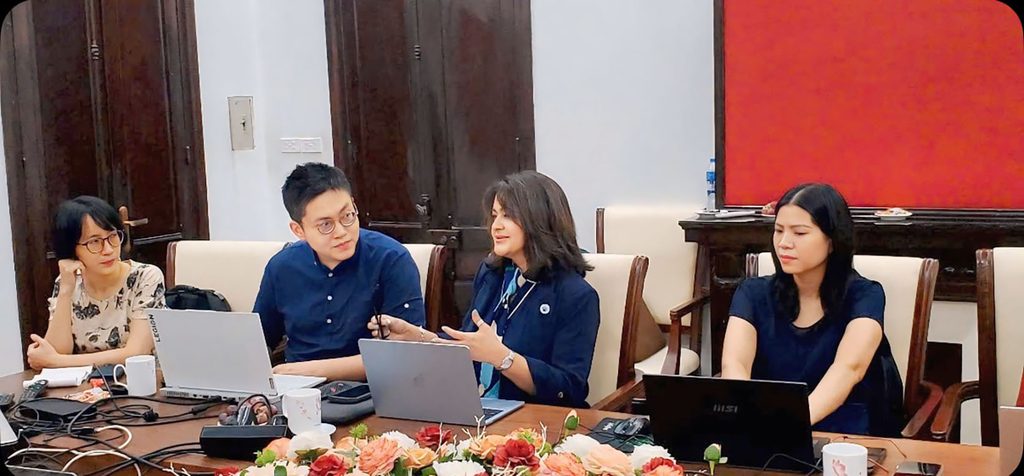
During my time in Hanoi, I had the privilege of working with researchers from the Vietnam National Institute of Educational Sciences (VNIES). At the initial seminar, I presented objectives around the United Nations Convention on the Rights of the Child (UNCRC) while departments shared their work around policy, child and human development, and equity. These objectives included reviewing core ideas and frameworks aligned with the UNCRC, including key standards, exploring domains and indicators, and designing a customized matrix tailored to support VNIES. The room was filled with thirty to forty researchers and directors. The setup was simple but thoughtful: laptops, projectors, fruit, and a cake decorated with the Vietnamese flag, topped with a white chocolate yellow star. It was a small gesture, but it spoke volumes about the warmth and intentionality of the team.
From the Institute, directors escorted me to a vegetarian restaurant known for its architecture, designed by a famous Vietnamese artist. The food was exquisite—fried mushrooms, Pad Thai tofu, dumplings, spring rolls—and the conversation even better. I learned that September 22 marked the first day of autumn, a time when many Vietnamese choose to eat vegetarian in honor of the season. We connected, shared stories, toasted with pandan and coconut drinks, and took a few photos. I told them, half-joking, that I might never return home if this was what lunch in Vietnam looked like.
It was in these initial days that I noticed a difference in communication styles. Vietnamese administrators were courteous and warm, but often indirect. Responses were layered with nuance, and agendas were fluid, sometimes finalized just a day before a session. In such a context, given the hierarchical nature of organizational communication, scheduling decisions, for instance, required a degree of flexibility and responsiveness. For someone used to precision, this was disorienting. But it was also a powerful lesson: leadership doesn’t always come dressed in bullet points and spreadsheets. Sometimes, it arrives in the form of quiet adaptability and trust in the moment.
Planning in Real Time
As I spent more hours with my host institution and partners, a second difference emerged around organizational planning. In my experience, planning is often a carefully laid-out process, with timelines, logistics, and contingency plans. In Hanoi, however, I encountered a more spontaneous rhythm. Sessions were scheduled with short notice, itineraries evolved in real time, and flexibility was not just appreciated but expected. Initially, this unsettled me; I had grown accustomed to predictable structures and clearly defined timelines. Yet as I adjusted, I began to recognize the value of this approach. The fluidity of arrangements created space for attentiveness to emerging needs, relationship-centered adjustments, and a form of cultural grace that does not always conform to predefined schedules or spreadsheet logic.
These differences challenged my assumptions about leadership. They reminded me that effective leadership is not about control, but about connection. It’s about being present, listening deeply, and responding with empathy. It created an opportunity for us to determine how to move forward and allowed VNIES colleagues to introduce me to several cultural centers in Hanoi, deepening my understanding of the local context beyond the formal sessions.
The Typhoon That Taught Me More
Nowhere was this flow more evident than during one unforgettable day in Hanoi, when the city was hit by a typhoon. The electricity held, but the streets were flooded within minutes. Water rose to knee level as I waded from the institute back to my hotel. The city came to a standstill. Traffic halted, shops closed, and the usual hum of Hanoi quieted into a kind of suspended stillness. Yet amid the chaos, there was care. A VNIES colleague insisted on escorting me back, ensuring I arrived safely. Throughout the day and into the night, friends and colleagues checked in to ask if I was alright, if I had food, and shared tips on how to stay safe during the storm.
What struck me most wasn’t the storm; it was the recovery. Within twenty-four hours, the floodwaters vanished. Shops reopened. Life resumed. Vietnam’s infrastructure may be limited, but its people are limitless in spirit. They didn’t wait for ideal conditions. They adapted. Rain jackets came out, work continued virtually, and there was an unspoken rhythm to how everyone moved forward. More than the storm itself, what stayed with me was the resilience. People looked out for one another. Strangers helped strangers. There was no panic, just quiet determination: a community weathering hardship together and moving on without complaint.
This Fulbright experience reframed my understanding of leadership. It wasn’t just about systems and schedules. It was about people. It was about how we show up for each other, whether in meetings offering tea, in moments of crisis offering food, or in everyday interactions learning more about one another’s culture. It was about the questions asked, the care offered, and the space created for others to thrive in.
Lessons That Linger
The project highlighted several cultural differences between Vietnam and the United States that shaped my learning experience and deepened my professional growth. Vietnam’s education system is rooted in strong collectivist values, respect for hierarchy, and a national commitment to the UN Convention on the Rights of the Child, contrasting with the more individualistic, decentralized, and legally complex landscape in the United States. These differences created both challenges and opportunities: navigating varying expectations around authority, communication styles, and child participation required cultural sensitivity, while exposure to Vietnam’s rights-based educational approach helped me see how legal frameworks, social norms, and national priorities influence how children’s rights are understood and implemented. Working closely with the VNIES interpreter further helped me bridge these cultural gaps, offering insight into how language, culture, and meaning interact in cross-national collaboration. Altogether, these cultural contrasts enriched my understanding of global approaches to children’s rights and strengthened my ability to support inclusive, culturally responsive services in my own community.
“Sometimes, the most profound growth comes not from what we plan, but from what we allow ourselves to experience.”
As I reflect on my time in Hanoi, I carry with me not just memories, but lessons. Lessons in flexibility, in empathy, in resilience. Lessons that remind me that leadership is not a fixed formula, but a living practice. And sometimes, the most profound growth comes not from what we plan, but from what we allow ourselves to experience. Whether over meals, in flooded streets, or during sessions, I found something greater than professional exchange. I found connection. I found community. I found a culture that values presence over perfection, and people who lead with heart.
Vietnam’s rich history, vibrant traditions, and resilient spirit offer profound lessons. Engaging with its people and culture gave me a nuanced appreciation for perspectives beyond my own, which is one of the most valuable outcomes of cultural exchange. I continue to collaborate with my colleagues at VNIES by supporting their research, offering guidance on structure and language, and sharing resources that strengthen our ongoing academic exchange. We have maintained open communication since the project, and these relationships have grown into meaningful professional partnerships. For the future and in partnership, I plan to work on research related to translation justice and the global circulation of educational policy. Through language, we aim to examine how policies and programs, often produced and disseminated in English, can create inequities in interpretation, understanding, and implementation across different linguistic and cultural contexts. This continued collaboration reflects my commitment to advancing more equitable, accessible, and culturally responsive approaches to education both locally and globally. Traveling with purpose, especially through programs like Fulbright, often leads to deeper introspection. Being in a new environment challenges your assumptions, stretches your comfort zone, and reveals parts of yourself you might not have known were there!
Further Reading
- Detrick, Sharon, ed. The United Nations Convention on the Rights of the Child: A Guide to the “Travaux Préparatoires.” Martinus Nijhoff, 1992.
- Huynh Thi Truc Giang. “Beginning of Protection of Children’s Rights in the Vietnamese Legal Development.” DÍKÉ: Journal of the Dezső Márkus Research Group for Comparative Legal History 5, no. 1 (2021): 105–18. https://doi.org/10.15170/DIKE.2021.05.01.07.
- 3. Tuyet, T. T. M. “Vietnam after More Than 30 Years Participating in the UN Convention on the Rights of the Child: Reality and Solutions.” Universum: экономика и юриспруденция, no. 12 (110) (2023): 32–37.
Biography
Dr. Monica Lakhwani is a Language Access and Community Impact Manager for Louisville Metro Government’s Office for Immigrant Affairs and an adjunct instructor at Jefferson Community and Technical College in the Humanities/English as a Second Language department. She received two Fulbright Awards (Fulbright-Hays in 2022 and Fulbright Specialist in 2025), first to the Philippines and more recently to Vietnam. Her interests lie in language and accessibility, cultural and educational practices, and cross-cultural studies. Email: monica.lakhwani@yahoo.com.