
Fulbright Chronicles, Volume 4, Number 3 (September 2026)
Author
Nathan C. Gehlert
Abstract
Teaching counseling skills in Vietnam required me to rethink assumptions about pedagogy. My experience began at Fulbright University Vietnam, where interactive methods translated seamlessly. That success bred confidence, but in the fall, the same course at Vietnam National University met silence and hesitation, revealing how deeply culture shapes learning. Infusing practice with cultural humility, I adapted my approach and deepened mutual understanding, an enduring lesson that continues to shape my work and advance Fulbright’s mission.
Keywords
Vietnam • pedagogy • counseling • motivational interviewing
Introduction
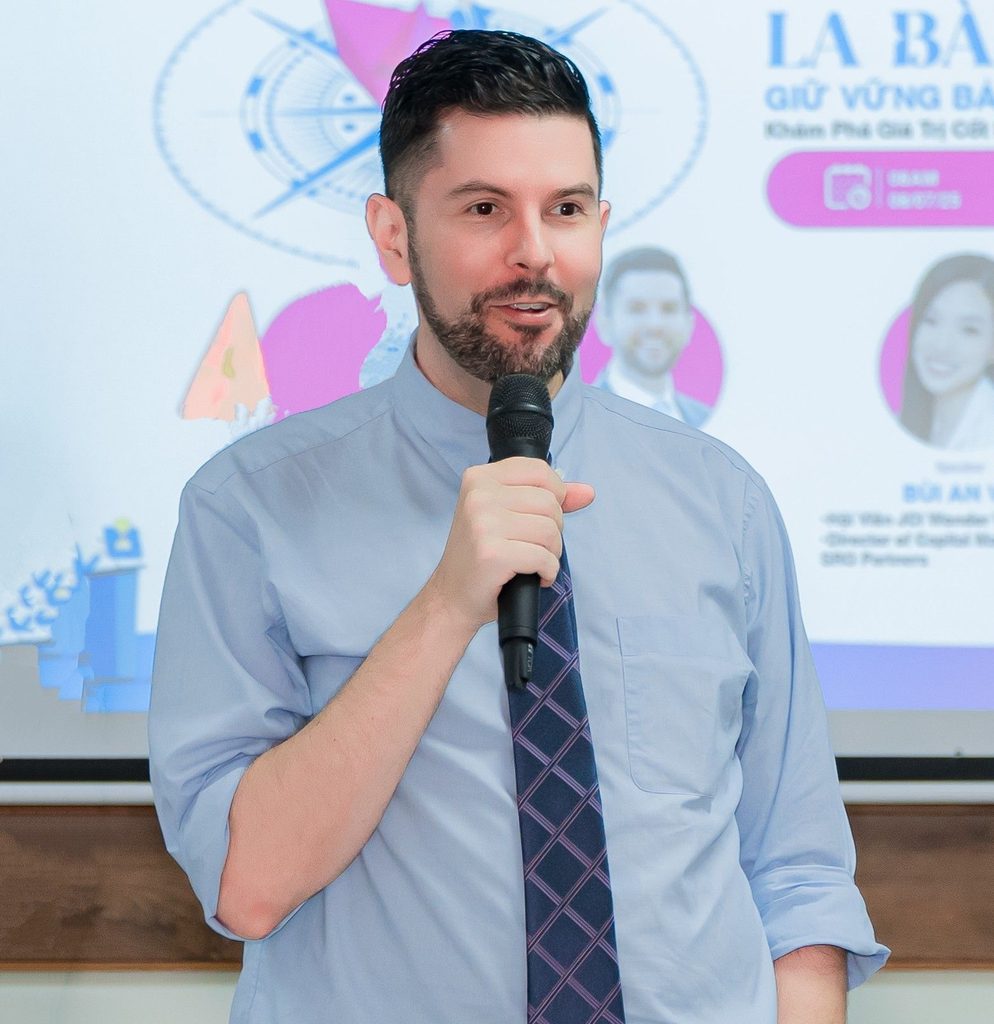
I still remember the silence. It was my first day teaching a counseling techniques course in the new master’s program in clinical psychology at the University of Social Sciences and Humanities (USSH), Vietnam National University Ho Chi Minh City. I explained a counseling skill and asked students to practice in small groups. Instead of movement and conversation, there were blank stares and hesitant glances; on one face, I recognized the shine of tears. The room was long and narrow. Ceiling fans droned, circulating the hot air. The microphone crackled. A space that should have invited dialogue felt heavy and still.
In that moment, I realized that my years of teaching in the United States, and even my earlier experience at Fulbright University Vietnam, had not prepared me for this classroom. I had entered the semester confident in my preparation and hopeful about my contribution as a Fulbrighter. I was also, if I am honest, carrying an assumption that what had worked well in one Vietnamese university would work as well in another. The silence unsettled that assumption. It asked me to consider whether my teaching practices presumed a set of norms about participation, risk, and authority that did not match the tradition my students had inherited.
That moment became the starting point for a different approach. If counseling and psychology education aim to cultivate the capacity to create safety for others, I needed to begin by creating it in my own classroom. To do that, I would have to adapt my methods, learn from my students, and allow the experience to reshape my understanding of how people learn.
Context: Mental Health in Vietnam
To understand my teaching experiences in context, it is important to situate them within the broader history of psychology and mental health in Vietnam. For much of the twentieth century, psychology was not recognized as a distinct discipline. Psychiatry, often limited to hospital-based care for severe mental illness, dominated the landscape, while counseling and psychotherapy were scarcely available. Only in recent decades have universities begun to develop formal programs in clinical psychology, and these remain few.
Even as awareness has grown, access remains limited. Vietnam has fewer than 1,000 psychiatrists serving a population of nearly 100 million, and trained counselors and psychologists are far fewer still. Outside of major cities, most people have little or no access to professional care. Stigma compounds this scarcity. Mental illness is often hidden, managed quietly within families, and counseling is sometimes viewed as unnecessary or even suspicious. For students in emerging university programs, this means they carry not only the responsibility of mastering clinical skills but also that of helping to shape a new field in the face of cultural hesitation.
My own involvement in this context predates my Fulbright. Beginning in 2015, I traveled to Vietnam regularly for short-term teaching and consulting, first at USSH. Over the course of six visits, I taught courses, observed local classrooms, and began to understand the resilience of Vietnamese students as well as the systemic challenges they faced. These visits gradually developed into an institutional exchange between USSH and my home university, John Carroll University in Cleveland, Ohio. What began as a short-term visiting lecturer role expanded into a recurring program that brought students and faculty from the two institutions into collaboration.
This five-year history meant that when I returned as a Fulbrighter in 2022–2023, I was stepping into an ongoing relationship rather than beginning a new one. The Fulbright year did not introduce me to Vietnam; it deepened and transformed a connection that had already been unfolding for years, giving me the chance to engage more fully in the teaching challenges and opportunities I had only glimpsed before.
Teaching in a Globalized University
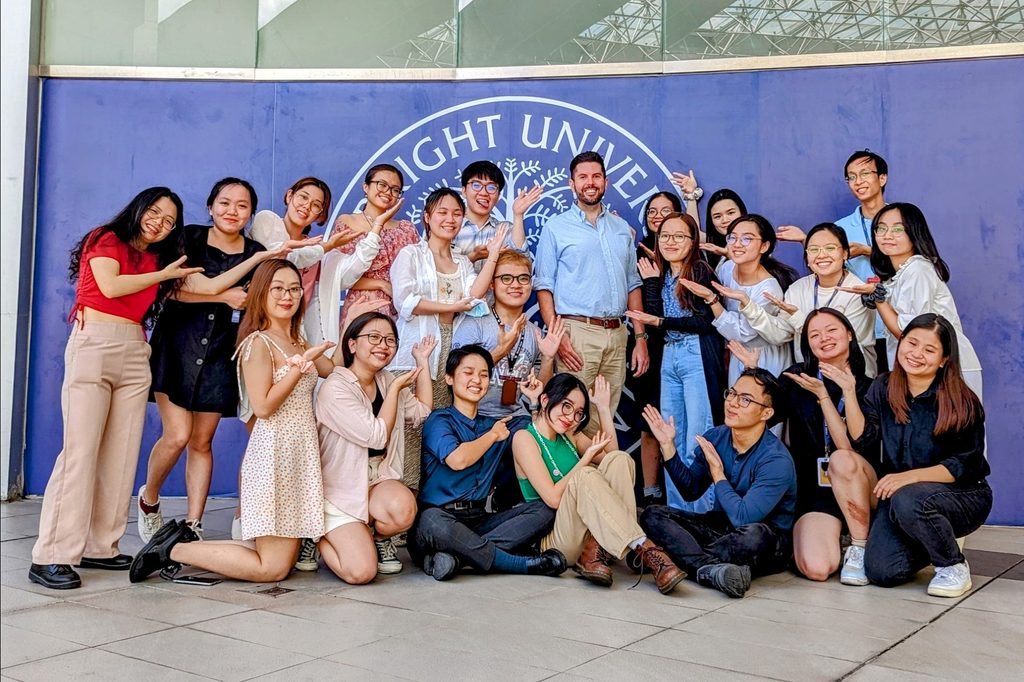
My Fulbright year began in the summer of 2022 at Fulbright University Vietnam (FUV), a young institution modeled on the American liberal arts tradition. There, I designed and introduced a counseling skills course into the undergraduate psychology curriculum, providing students with their first sustained opportunity to practice counseling skills in a structured setting. FUV students are admitted not only for academic excellence but also for qualities such as initiative, creativity, and community engagement. Their English proficiency was high. The classrooms were modern, designed for interaction, and equipped with technology that supported dialogue.
From the first day, students entered the room ready to ask questions, discuss, and experiment. Group work required no explanation. At times, they even offered direct feedback about what was and was not working in the course, which created opportunities for adjustment and dialogue. The same assessments I had used in the United States, including reflective writing, knowledge checks, and video demonstrations, yielded strong performance. In several instances, the results from these undergraduate students exceeded the benchmarks I had observed among the American graduate students I was used to teaching.
This experience affirmed what becomes possible when classrooms are designed for dialogue. From day one, we could build the course around deliberate practice that develops early professional identity through both mastering techniques and reflecting on their ethical and cultural use. I left the summer confident that these methods would transfer easily. That confidence, I later learned, needed recalibration.
Teaching in a Confucian Tradition
In the fall of 2022, I moved across town to USSH to adapt and teach the same course, this time in a new master’s program in clinical psychology. I had helped shape the course’s introduction into the curriculum, ensuring that students in this pioneering graduate program could engage with counseling skills training alongside their study of theory. The students were older, some pursuing psychology as a second career. Their admission reflected strong academic achievement on competitive exams, and they brought discipline and seriousness to their studies. Their classroom behavior, however, reflected a tradition of learning in which knowledge is transmitted by the teacher and received by the student. Questioning the instructor was uncommon. Volunteering, especially in front of peers, carried social risk. When participation was framed as a test of competence rather than a path to it, silence could function as protection.
The physical environment reinforced those dynamics. The classroom was long and narrow, designed for lectures, not for movement. The microphone, with a short cord, anchored conversation at the front of the room. Language added another layer. I had been told that I could teach in English, yet comprehension varied widely. We brought in an interpreter, which helped but slowed the rhythm of exchange. Pauses that would have been brief in a first-language setting became elongated, and momentum was difficult to sustain.
It was in this setting that my first group activity fell flat. The silence that followed was not resistance but a rational response within a particular cultural frame. For me, however, the contrast with FUV was jarring. Methods that had succeeded so naturally in the summer now failed, and the setback forced me to see what I had overlooked. My U.S. teaching experience—and even my early Fulbright semester at FUV—had not prepared me for this environment.
The recognition was humbling and useful. Rather than lowering expectations, I chose to anchor the course in mutual respect and to build in scaffolding that made participation possible. The goal remained unchanged; what needed to change was the path, one that had to align with the traditions my students carried into the classroom.
Lessons in Humility and Change
My adjustments had several parts. The pace slowed, and activities were broken into smaller steps. I came to see that explanation was not enough. I began modeling the skills directly so students could see and hear them in practice. Whole-class exercises shifted to pairs or trios, which reduced the social risk of practice. Brief lectures alternated with structured, time-limited exercises, balancing the comfort of receiving information with the gains of experiential learning. Awkwardness was named as a predictable feature of trying new skills in public, not a marker of failure.
“Teaching, like counselling, is most effective when both parties bring essential expertise. I held specialized knowledge; students held cultural expertise.”
Helpful alignment also emerged between these pedagogical shifts and the counseling approach at the center of the course. I was teaching the course using the framework of Motivational Interviewing, a counseling method grounded in empathy and partnership rather than persuasion. The philosophy behind Motivational Interviewing reminded me that teaching, like counseling, is most effective when both parties bring essential expertise. I held specialized knowledge; students held cultural expertise. Learning would require us to meet as partners.
Over time, evidence accumulated that the approach was working. In one assignment, students submitted short videos in which one student served as counselor and another as client, sharing a real concern appropriate for class. The first set of videos surprised me. Techniques were applied with care, and core skills were visible. As expected in early training, interpersonal style still needed time to develop naturalness and flow. The classroom’s quiet had obscured a more faithful story: students were practicing diligently.
Not every plan succeeded. A hoped-for co-teaching arrangement, intended to build local capacity to sustain the course in the curriculum, did not materialize; the role shifted toward interpretation rather than joint pedagogy. Looking back, I also wonder if more bilingual resources or culturally grounded examples might have eased participation further. The lesson was familiar and exacting: durable programs require time, consistent investment, and faculty who can carry the work forward within their institutional cultures.
Most importantly, my internal stance recalibrated. Moments of discomfort became data. When an activity stalled, it signaled a need for additional scaffolding; when students hesitated, it pointed to the need for more psychological safety. The guiding question shifted from “Why are students not moving toward my plan?” to “How can the plan move toward the students?” That shift continues to guide my teaching today.
Enduring Impact
The impact of these experiences has been personal, pedagogical, and institutional. Personally, my posture in the classroom is more deliberate. I assume that struggle often signals effort, not apathy. I design for safety and challenge in tandem, and I build courses around structured practice that links technique to humane care. This stance reflects a lifelong commitment to Fulbright’s mission: building mutual understanding through sustained, people-to-people work.
Pedagogically, the experience clarified the importance of explicit skills training in counseling and psychology education. In many Vietnamese programs, theory still receives more time and attention than practice. By embedding structured role-plays, video assignments, and supervised feedback into my courses, I saw students not only grasp techniques but also begin to imagine themselves as counselors. Some of my former USSH students, now working as psychologists or educators, have told me years later that they continue to draw on the lessons of that first course. One explained that when she sits with a client, she often recalls the structure of the practice dialogues we used in class.
At Fulbright University Vietnam, the Counseling Techniques course, renamed Person-Centered Counseling, has become a permanent fixture of the psychology curriculum. Students who take it now enter internships and professional settings with tools that give them a head start in a field that is still being built. One undergraduate recently completed an internship placement at an international school, where she used Motivational Interviewing strategies to support adolescents navigating academic stress. Her supervisor noted that she brought a level of professionalism unusual for someone so early in training. Stories like hers illustrate how early skills-based preparation is beginning to ripple outward into the institutions where students work.
Institutionally, FUV participates in a broader national effort to strengthen psychology education. The continuity of this course within a liberal arts framework represents one modest contribution, but the intention is larger: to prepare graduates who can connect evidence-based methods with Vietnam’s cultural realities. For me, that is citizen diplomacy. Fulbright made it possible to share a set of practices while receiving perspectives that refined them. The year was not an ending but a beginning. By accepting a full-time appointment at FUV, I committed to continuing this work beyond the grant period and to supporting the first generation of psychologists being trained in Vietnam.
Looking Ahead
I return often to the memory of that day at USSH, to the silence that felt so heavy. At the time, it read like failure. Now I understand it as an invitation. It asked me to listen more closely to the room, to attend to the effort and vulnerability that participation requires in different contexts, and to find ways to make that risk feel possible. It also reminded me that growth in teaching, as in counseling, proceeds by small, deliberate steps that are repeated and refined.
The future of psychology in Vietnam will be built by students who are learning today to combine sound theory with compassionate practice. Their success will depend on many factors. Among them will be the willingness of educators to adapt methods to local realities and to treat cultural differences not as an obstacle but as a guide. My Fulbright year did not resolve those questions. It gave me better ones to ask and a clearer path to follow.
I am grateful for the colleagues and students who have allowed me to learn alongside them. The work continues, and so does the commitment: to infuse teaching with cultural humility, to pair practical skill with reflective purpose, and to advance Fulbright’s mission of mutual understanding in the everyday discipline of the classroom.
Further Reading
- Freire, Paulo. Pedagogy of the Oppressed. Continuum, 1970.
- Hofstede, Geert. Culture’s Consequences: Comparing Values, Behaviors, Institutions and Organizations Across Nations. Sage, 2001.
- Miller, William R., and Stephen Rollnick. Motivational Interviewing: Helping People Change and Grow. 4th ed. Guilford Press, 2023.
- Nguyen, Phuong-Mai, Cees Terlouw, and Albert Pilot. “Cooperative Learning vs. Confucian Heritage Culture’s Collectivism: Confrontation to Reveal Some Cultural Conflicts and Mismatches.” Asia Europe Journal 4, no. 3 (2006): 403–19.
Biography
Nathan C. Gehlert, Ph.D., is a professor of psychology at Fulbright University Vietnam in Ho Chi Minh City, Vietnam. He served as a Fulbright U.S. Scholar (2022–2023; award year 2021, in-country arrival delayed due to the COVID-19 pandemic). He can be contacted at nathan.gehlert@fulbright.edu.vn.